|
Metals
|
Characteristics
|
Common Grades
|
|
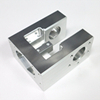 Aluminum Alloys
|
Lightweight, excellent machinability, and superior surface treatment compatibility.
|
ADC12, A380, A413, ZL102 |
|
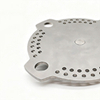 Stainless Steel
|
High corrosion resistance with reliable mechanical properties. |
CF8, CF8M (304/316 cast equivalent) |
|
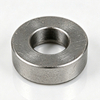 Carbon Steel
|
High strength with good post-cast machinability. |
WCB, 1020, 1045 |
|
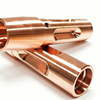 Brass
|
Good corrosion resistance, decorative finish, and good machinability. |
C83600, C95400 |
|
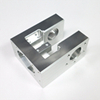 Zinc Alloys
|
Excellent fluidity, cost-effective, and ideal for precision aesthetic components.
|
Zamak 3, Zamak 5 |
Custom Metal Casting Parts We Manufacture
Industrial Housings and Equipment Covers
Keywin manufacture cast metal housings, machinery covers, and protective components requiring complex external shapes and mounting features.
For components with critical interfaces, our machining capabilities support accurate holes, threaded connections, and mating surfaces after casting.
Automotive and Mechanical Components
Our precision metal casting services support selected automotive-related equipment components, mounting brackets, gearbox covers, and mechanical housings.
Manufacturing requirements are evaluated according to material grade, operating loads, dimensional tolerances, and production volume.
Pump and Machinery Components
Precision metal casting can be suitable for pump housings, industrial equipment bodies, and components containing complex internal cavities.
Our engineers review wall thickness, draft angles, core requirements, and machining allowances to help achieve practical mold designs.
Precision Connectors and Metal Fittings
For components requiring detailed shapes or multiple mounting features, we offer casting followed by drilling, tapping, and CNC finishing where necessary.
These precision metal casting services support industrial connectors, custom fittings, and mechanical assembly components.
Our Custom Precision Metal Casting Process
1. Drawing and Requirement Review
Submit 2D drawings or 3D CAD files, material specifications, expected quantities, and functional requirements.
2. Casting Process Selection
Our engineers evaluate part geometry, casting feasibility, tooling cost, and production volume to recommend an appropriate casting method.
3. Mold Design and Development
We develop the mold or die and evaluate manufacturing parameters according to the approved design.
4. Mold Trial and Sample Inspection
Trial parts are produced and inspected to identify potential dimensional or quality issues before production approval.
5. Casting and Secondary Machining
Approved components are cast, trimmed, and machined as required to meet the final drawing specifications.
6. Final Inspection and Delivery
Finished castings undergo applicable dimensional and quality inspections before packaging and shipment.