How 5-Axis Machining Improves Positional Accuracy
Oct.08, 2026
If you are struggling with cumulative tolerance errors, re-clamping deviation, or unstable part-to-part consistency, this article will show you a practical way to solve it. In the following steps, I will explain how Keywin uses 5 axis cnc machining services to improve positional accuracy, reduce setup-induced error, and help you achieve repeatable results with a clear, efficient process that is easy to apply in real production.
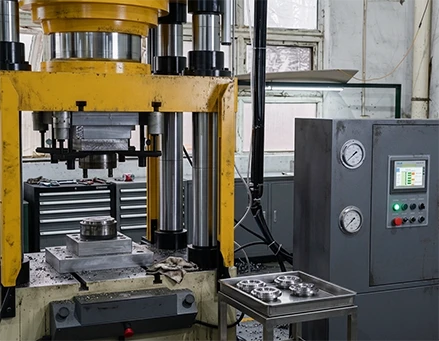
At Keywin, we use How 5-Axis Machining Improves Positional Accuracy as a core process principle, not just a marketing phrase. The reason is simple: when a workpiece can be machined on multiple faces in one setup, the position of each critical feature stays referenced to the same datum chain.
That directly reduces:
- Fixturing error
- Re-clamping misalignment
- Cumulative stack-up tolerance
- Tool approach-angle distortion
- Manual handling variation
In practice, this means tighter feature-to-feature accuracy, often down to 0.01mm precision for suitable parts, depending on geometry, material, and tolerance stack.
For customers in aerospace, medical devices, robotics, and precision automation, this is the difference between a part that merely looks correct and a part that assembles reliably the first time.
How 5-Axis Machining Improves Positional Accuracy in Real Production
Why Positional Accuracy Becomes a Problem in 3-Axis Workflows
When a part is moved from one fixture to another, the coordinate origin changes slightly. Even a small shift can create measurable deviation at the final feature.
Typical error sources include:
- Multiple setups
- Soft jaw wear
- Improper datum transfer
- Thermal drift
- Tool deflection
- Operator-dependent positioning
For long parts, deep cavities, angled faces, and compound surfaces, a conventional 3-axis workflow often requires several repositionings. Each repositioning introduces risk. Over time, that risk becomes a quality issue, especially when clients require 100% inspection, traceability, and acceptance against standards like ASTM, DIN, or customer-specific GD&T callouts.
How Keywin’s 5 Axis CNC Machining Services Improve Accuracy Step by Step
1. We lock the datum chain in a single setup
The first improvement comes from setup consolidation. By machining multiple faces in one clamping cycle, 5 axis cnc machining services preserve the relationship between datums and critical features.
This helps us maintain:
- Positional tolerance
- Perpendicularity
- True position
- Angularity
- Profile accuracy
When the datum chain remains stable, downstream assembly becomes more predictable.
2. We reduce tool offset accumulation
In multi-setup production, each re-clamp may require new offsets and re-zeroing. That creates opportunities for human error.
With How 5-Axis Machining Improves Positional Accuracy, we minimize those offset transfers and keep the NC program aligned with the same coordinate system. This is especially valuable for parts with:
- Cross-drilled holes
- Compound angles
- Impeller blades
- Medical housings
- High-mix precision brackets
3. We optimize tool engagement and cutting direction
A 5-axis spindle can orient the tool more favorably to the surface. That improves chip evacuation, reduces chatter, and lowers tool deflection.
The real-world effect is clear:
- Better surface finish
- More consistent dimensional control
- Lower scrap rate
- Longer tool life
- Reduced secondary finishing
In many cases, this is where Keywin delivers the most measurable value to customers seeking 5 axis cnc machining services with strict positional repeatability.
4. We verify geometry with precision inspection
Accuracy is not claimed; it is verified.
At Keywin, we support inspection workflows using tools such as:
- CMM
- 2.5D vision measurement
- Height gauges
- Micrometers
- Gauge pins
- Thread gauges
- Surface roughness testers
For critical projects, we can follow 100% inspection requirements and document results against customer drawings and standards such as DIN or ASTM, depending on the project specification.
Where 5-Axis Machining Delivers the Biggest Business Impact
The biggest advantage is not only technical. It is operational.
Businesses usually see improvements in:
- Assembly fit
- Lower rework cost
- Shorter lead time
- Fewer fixtures
- Higher first-pass yield
- More stable batch consistency
For example, a part that once needed three setups may be completed in one setup. That reduces cycle variation and improves repeatability across the entire batch.
For procurement teams and product engineers, this often translates into fewer supplier issues and faster launch readiness. For OEMs, it improves delivery confidence. For buyers of 5 axis cnc machining services, it reduces total cost of quality.
Common Challenges in 5-Axis Machining and How We Solve Them
Even with advanced equipment, challenges can still appear. The difference is how effectively they are controlled.
1. Programming complexity
5-axis toolpaths are more complex than 3-axis paths.
How we handle it:
- Use CAM software with collision simulation
- Verify tool orientation and holder clearance
- Perform dry runs and virtual setup validation
2. Machine calibration drift
Even a high-end machine can lose accuracy if not maintained.
How we handle it:
- Routine spindle and rotary-axis calibration
- Ballbar testing
- Periodic geometric error compensation
- Preventive maintenance schedules
3. Part deformation
Thin-wall parts may move during clamping or cutting.
How we handle it:
- Custom soft jaws and vacuum fixtures
- Balanced cutting parameters
- Reduced cutting force strategies
- Stepwise roughing and finishing
4. Material variability
Aluminum, stainless steel, titanium, and engineering plastics behave differently.
How we handle it:
- Material-specific feeds and speeds
- Adaptive toolpaths
- Heat management
- Tool wear monitoring
These controls are part of why How 5-Axis Machining Improves Positional Accuracy is not just about machine motion; it is about process discipline.
Tools and Resources That Improve Execution Efficiency
If you want stronger results from 5 axis cnc machining services, the right tools matter.
Recommended resources include:
-
Advanced CAM software
For collision avoidance, tool orientation control, and optimized machining strategy. -
CMM inspection systems
For objective dimensional validation and positional tolerance reporting. -
Digital job travelers
To keep setup records, revision control, and process traceability. -
Fixturing simulation tools
To reduce setup risk before metal is cut. -
SPC monitoring
To detect process drift early and maintain capability.
At Keywin, we use these resources to support stable production, faster response, and consistent quality feedback. In many cases, we can provide 24-hour response for technical review, quotation clarification, and manufacturability feedback.
Key Comparison of Setup Efficiency
| Process Type | Number of Setups | Positional Risk | Typical Result |
|---|---|---|---|
| Traditional 3-axis | 2–4 | Higher | More stack-up error |
| 4-axis | 1–2 | Medium | Better indexing consistency |
| 5-axis | 1 | Lower | Stronger datum control and repeatability |
This is why Keywin recommends 5 axis cnc machining services for complex parts where true position matters more than simple feature creation.
Practical Steps You Can Take Now
If you want to improve positional accuracy immediately, I recommend following this sequence:
- Identify all critical datums on the drawing
- Reduce the number of part re-clamps
- Use a one-setup machining strategy where possible
- Select fixturing that minimizes deformation
- Validate toolpaths in CAM simulation
- Inspect first article dimensions with CMM
- Apply SPC for batch stability
- Document tolerances against ASTM, DIN, or customer standards
When these steps are combined with How 5-Axis Machining Improves Positional Accuracy, the process becomes far more robust and production-ready.
Why Keywin Is a Reliable Choice for Precision Projects
With Keywin, you get more than machining capacity. You get a controlled manufacturing workflow built around accuracy, traceability, and communication.
We support:
- Precision to 0.01mm on suitable features
- 100% inspection for critical orders
- Rapid technical feedback
- Custom fixtures for difficult geometries
- Stable production for repeat orders
- Expert support for 5 axis cnc machining services
That combination is especially important when the part must fit, function, and pass inspection without repeated adjustment.
Final Takeaway You Can Use Immediately
If positional accuracy is affecting your delivery time, assembly quality, or scrap rate, the solution is to reduce setup variation and tighten datum control. That is exactly what How 5-Axis Machining Improves Positional Accuracy delivers.
At Keywin, we apply 5 axis cnc machining services to help customers solve tolerance stack-up, reduce re-clamping error, and improve first-pass yield. Start by reviewing your critical datums, then move toward a one-setup strategy, validate with CMM inspection, and confirm compliance with ASTM or DIN requirements where needed.
If you are ready to improve accuracy, reduce risk, and simplify production, Keywin can help you move from trial-and-error machining to a repeatable, inspection-ready process.