How Engineering Plastics Compare for CNC Machining
Oct.30, 2026
If you are trying to choose the right material for CNC milling, turning, or multi-axis precision parts, this guide from Keywin will help you make the decision quickly and correctly. We will show you how engineering plastics compare for CNC machining, which grades are best for dimensional stability, wear resistance, chemical resistance, and cost, and how to avoid common machining defects so you can move from material selection to production with fewer delays, tighter tolerances, and lower scrap rates.
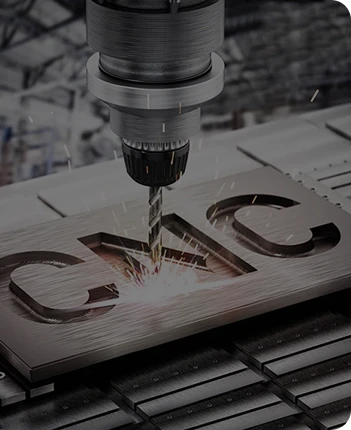
At Keywin, we solve a common manufacturing problem: customers often need a plastic part that looks simple on paper, but fails in the shop because of warpage, poor chip control, thermal expansion, or moisture absorption. Our plastic machining service is built to reduce that risk.
We typically support customers with:
- Precision machining to ±0.01mm on selected parts
- 100% inspection for critical dimensions
- Material selection support based on ASTM and DIN specifications
- 24-hour response for RFQs and engineering questions
When a customer asks about How Engineering Plastics Compare for CNC Machining, we do not just quote a price. We evaluate the application, load condition, chemical exposure, and tolerancing requirement first.
How we help you choose the right engineering plastic for CNC machining
-
Define the working environment
- Temperature
- Load
- Wear cycle
- Chemical contact
- Electrical insulation needs
-
Set the machining target
- Tolerance
- Flatness
- Surface finish
- Quantity
- Lead time
-
Match the resin to the job
- PEEK for high heat and high performance
- PTFE for chemical resistance
- Delrin (POM) for stable dimensional control
- Nylon for toughness, with moisture considerations
- UHMW-PE for impact and abrasion
-
Plan the machining process
- Tool selection
- Feed and speed control
- Clamping strategy
- Heat management
- Post-machining inspection
This step-by-step approach is how we keep a plastic machining service efficient and production-ready.
A practical workflow we use before machining starts
The right material depends on the balance between machinability, mechanical performance, and long-term stability. In practice, How Engineering Plastics Compare for CNC Machining comes down to whether the part must hold tolerance, resist wear, survive chemicals, or maintain performance under heat.
| Material | Machinability | Dimensional Stability | Heat Resistance | Chemical Resistance | Typical Use |
|---|---|---|---|---|---|
| PEEK | Good | Excellent | Excellent | Excellent | Semiconductor, aerospace, medical |
| PTFE | Fair | Low-Medium | Excellent | Excellent | Seals, insulation, chemical components |
| POM / Delrin | Excellent | Excellent | Medium | Medium | Gears, fixtures, precision housings |
| Nylon (PA6/PA66) | Good | Medium | Medium | Medium | Wear parts, rollers, mechanical components |
| UHMW-PE | Fair | Medium | Low-Medium | Excellent | Sliding parts, liners, impact components |
| PC | Good | Good | Medium | Good | Covers, clear components |
| ABS | Excellent | Good | Low-Medium | Medium | Prototypes, enclosures |
How engineering plastics compare for CNC machining in real applications
PEEK is often the first choice when the part must survive aggressive conditions.
We recommend it when customers need:
- High-temperature performance
- Tight tolerance retention
- Excellent chemical resistance
- Low creep under load
In many CNC machining projects, PEEK is ideal for precision brackets, medical fixtures, and semiconductor components. It is more expensive, but it can reduce downstream failure and replacement costs.
PEEK: the premium choice for demanding CNC parts
PTFE is excellent in corrosive environments, but it has high creep and relatively low structural rigidity.
That means:
- It machines cleanly
- It resists most chemicals
- It may deform under clamping or long-term load
For How Engineering Plastics Compare for CNC Machining, PTFE is often used where sealing and insulation matter more than rigidity.
PTFE: best for chemical resistance, but harder to hold tight tolerance
Delrin is one of the most popular materials in a plastic machining service because it combines:
- Excellent machinability
- Low friction
- Good dimensional stability
- Strong surface finish quality
We often select POM for jigs, gears, housings, and precision functional prototypes. It is especially useful when the customer needs a reliable, cost-effective solution.
POM / Delrin: the workhorse for precision machining
Nylon offers good toughness and wear resistance, but it absorbs moisture, which affects dimensions.
We usually recommend nylon when:
- Impact resistance is important
- The part will experience cyclic loading
- Slight dimensional change is acceptable
For tighter tolerances, we often precondition the material and adjust the machining process accordingly.
Nylon: strong and tough, but moisture must be controlled
To make the right choice, we compare the material against the actual part requirement, not just the catalog data.
What matters most when comparing engineering plastics for CNC machining
If the part must hold ±0.01mm or support accurate assembly, dimensional stability is critical.
Best options:
- PEEK
- POM / Delrin
- PC in moderate conditions
Challenges:
- Nylon may expand with moisture
- PTFE may creep over time
1. Dimensional stability
For high-heat environments, softening or deformation can cause failure.
Best options:
- PEEK
- PTFE
For medium-temperature parts:
- POM
- PC
2. Thermal performance
For sliding components, friction coefficient matters.
Best options:
- POM
- UHMW-PE
- PTFE for low-friction applications
3. Wear resistance and friction
When the part is exposed to solvents, acids, or cleaners, the resin must be chemically stable.
Best options:
- PEEK
- PTFE
4. Chemical compatibility
Some materials are easier to process into repeatable parts.
Best options:
- POM
- ABS
- PC
Harder materials may increase tool wear, so we use carbide tooling, optimized cutting parameters, and controlled chip evacuation.
5. Machining efficiency
Even the best material can fail if the machining process is not controlled. In How Engineering Plastics Compare for CNC Machining, execution matters as much as selection.
Common CNC machining challenges and how we overcome them
This often happens because of internal stress in the stock material or excessive heat during cutting.
How we reduce it:
- Use stress-relieved stock
- Remove material in balanced stages
- Control spindle speed and feed rate
- Allow stabilization before final finishing
Problem: warpage after machining
Some plastics, especially softer grades, can form burrs at exit points.
How we reduce it:
- Optimize tool geometry
- Use sharp carbide tools
- Apply proper chip-breaking strategy
- Add deburring and edge break processes
Problem: burrs and poor edge quality
Moisture and creep can cause parts to move out of spec.
How we reduce it:
- Precondition material when needed
- Select a more stable resin
- Verify dimensions under controlled inspection conditions
- Recommend design changes for long-term loading
Problem: dimensional drift in nylon and PTFE
A rough finish may affect sealing, appearance, or friction.
How we reduce it:
- Use proper tool path strategy
- Control chip load
- Apply finishing passes
- Inspect surface roughness where required
Problem: surface finish inconsistency
A professional plastic machining service should not rely on visual checks alone. At Keywin, we align quality control with customer requirements and industry standards.
We commonly support:
- ASTM material references for resin properties
- DIN dimensional and testing references where specified
- Critical inspection using CMM, micrometers, height gauges, and gauge pins
- First article inspection and batch sampling
- 100% inspection for key dimensions when required
For regulated industries, traceability and documentation are often just as important as the finished part. That is why we provide inspection reports and process confirmation when needed.
Standards and quality control we apply in production
To shorten lead time and reduce scrap, we rely on the right machining and inspection resources.
Tools and resources that improve CNC machining efficiency
- Carbide end mills for clean cutting
- Single-flute tools for chip evacuation in plastics
- Vacuum fixtures or soft jaws for low-mark clamping
- CMM for dimensional verification
- Surface roughness tester for functional surfaces
Recommended tools
- Material datasheets from resin suppliers
- ASTM and DIN reference tables
- CNC DFM review before production
- Tolerance stack-up analysis for assemblies
When customers share 2D drawings, 3D CAD files, and application notes early, our plastic machining service can usually reduce back-and-forth and accelerate the quotation cycle.
Useful design resources
If you need a fast answer to How Engineering Plastics Compare for CNC Machining, use this rule set:
- Choose PEEK if the part must resist heat, chemicals, and load.
- Choose PTFE if chemical resistance and low friction are the priority.
- Choose POM / Delrin if you need the best all-around precision machining balance.
- Choose Nylon if toughness matters more than ultra-tight tolerance.
- Choose UHMW-PE if impact and abrasion resistance are the main goals.
This decision method is practical for procurement teams, design engineers, and buyers who need a reliable part without unnecessary material cost.
How to decide quickly: the simplest selection method
Selecting the wrong plastic can cause:
- Assembly interference
- Premature wear
- High rejection rates
- Longer lead times
- Increased rework and tooling cost
By comparison, the right material and process control can improve:
- First-pass yield
- Dimensional consistency
- Product reliability
- Production efficiency
- Customer satisfaction
That is why we treat How Engineering Plastics Compare for CNC Machining as an engineering decision, not just a purchasing decision.
Why this matters to your business
Visual reference for engineering plastic machining applications
Final checklist before you place your order
Before starting production, review these key points:
- Confirm working temperature and chemical exposure
- Define tolerance and surface finish requirements
- Select the most suitable resin grade
- Ask for DFM feedback before machining
- Verify inspection method and reporting needs
- Request sample or first article approval if the part is critical
If you follow these steps, you can solve most sourcing and machining problems before they reach the shop floor. At Keywin, we use this method to deliver reliable plastic machining service results with fast response, tight tolerances, and inspection-backed quality.
Conclusion
The best answer to How Engineering Plastics Compare for CNC Machining is to match the resin to the real application, then machine it with controlled parameters and verified inspection. Keywin supports this process with engineering guidance, precision machining, and quality control designed for production stability. If you need a dependable plastic machining service, we are ready to help you move from material selection to finished parts with less risk, less waste, and faster turnaround.