How Material Selection Impacts CNC Machining Price
Aug.27, 2026
If you are trying to control CNC machining costs without sacrificing quality, this guide from Keywin will show you exactly how to evaluate material options, reduce hidden expenses, and choose the right process in a simple, efficient way. By following these steps, you can make faster sourcing decisions, improve part performance, and avoid expensive rework in metal cnc services.
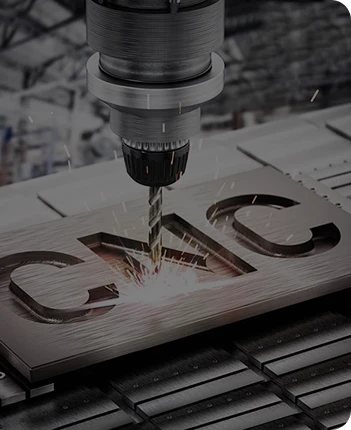
When customers ask us about How Material Selection Impacts CNC Machining Price, we explain that the material is not just a raw input; it determines tool wear, cutting speed, cycle time, fixture design, inspection method, and scrap risk. In real production, the same geometry in aluminum may machine 3–5 times faster than stainless steel, while titanium often requires slower feeds, stronger tooling, and more frequent tool changes.
That is why How Material Selection Impacts CNC Machining Price must be analyzed before RFQ approval, not after.
At Keywin, we help buyers compare machinability, mechanical properties, and finishing requirements before production starts. This avoids late-stage redesigns and supports stable lead times for global procurement teams who rely on metal cnc services.
Why material choice changes the quote so much in Keywin CNC projects
To understand How Material Selection Impacts CNC Machining Price, I recommend looking at these variables first:
-
Machinability rating
- Free-machining brass and aluminum generally cut faster.
- Hardened steels and nickel alloys increase tool load and cycle time.
-
Raw material cost
- 6061 aluminum is usually far more economical than 7075 or stainless 316.
- Titanium and Inconel can push material cost significantly higher.
-
Tool wear and machine load
- Abrasive alloys shorten carbide tool life.
- Higher spindle torque and coolant demand raise production cost.
-
Tolerance and surface finish
- Tight tolerances to 0.01 mm require controlled thermal stability and stricter inspection.
- Fine Ra requirements can increase secondary finishing time.
-
Certification and testing
- Traceability, mill certs, and compliance to ASTM, DIN, or equivalent standards can add processing steps.
In our experience, How Material Selection Impacts CNC Machining Price is often less about the “price of the bar stock” and more about the total machining burden placed on the shop floor.
The main cost drivers behind the material decision
The most effective way to manage How Material Selection Impacts CNC Machining Price is to compare materials using a structured decision path instead of guesswork.
A step-by-step method I use to reduce CNC machining cost
Before selecting a material, I first confirm:
- Load-bearing condition
- Heat exposure
- Corrosion environment
- Electrical conductivity needs
- Weight limitation
- Cosmetic finish requirement
For example, if a part only needs moderate strength and good corrosion resistance, aluminum may be a better option than stainless steel. If the part must survive extreme temperatures, the conversation changes immediately.
This is where How Material Selection Impacts CNC Machining Price becomes a design decision, not just a procurement question.
Step 1: Define the part’s functional requirement
We evaluate whether the engineering requirement can be met with a lower-cost, easier-to-machine alloy.
Common examples in metal cnc services:
- Aluminum 6061: excellent machinability, efficient for prototypes and enclosures
- Brass C360: strong cutting performance, stable for fittings and connectors
- Stainless steel 304/316: higher corrosion resistance, but slower machining
- Carbon steel: economical, but may require more finishing and protection
- Titanium Grade 5: high strength-to-weight ratio, but expensive to machine
When buyers compare options this way, How Material Selection Impacts CNC Machining Price becomes visible in cycle time, tool consumption, and finishing cost.
Step 2: Match performance to machinability
A part that needs 0.01 mm precision is fundamentally different from one that only needs ±0.1 mm. Tight tolerance parts require:
- Stable fixturing
- Thermal compensation
- More passes
- Higher inspection frequency
- Reduced feed rates
If your design includes a polished or anodized finish, that also changes the cost structure. A material that machines smoothly may reduce post-processing compared with a harder alloy.
This is one of the most overlooked factors in How Material Selection Impacts CNC Machining Price.
Step 3: Check tolerance and surface finish requirements early
Material economics change with quantity:
- Prototype quantity: setup time and programming dominate
- Small batch: material wastage and tool life matter more
- Mass production: cycle time and consistency become the biggest cost centers
For low-volume orders, I usually recommend materials that are easy to deburr and inspect. For larger orders, process stability matters more than raw material unit cost.
So, when we discuss How Material Selection Impacts CNC Machining Price, I always ask: “Is this a one-off prototype or a recurring production part?”
Step 4: Estimate production volume and batch strategy
A good DFM review can save real money. At Keywin, we often identify unnecessary cost by reviewing:
- Overly tight tolerances on non-critical dimensions
- Deep pockets with poor tool access
- Thin walls that cause chatter
- Excessive thread depth
- Material over-specification
This is especially important in international sourcing, where delays are costly. A 24-hour response to DFM issues helps buyers move quickly and avoid costly iterations.
That is why How Material Selection Impacts CNC Machining Price should always be reviewed alongside manufacturability.
Step 5: Request DFM support before releasing the drawing
Below is a practical reference I use when helping customers choose materials in metal cnc services.
| Material | Machinability | Typical Cost Impact | Common Use | Key Risk |
|---|---|---|---|---|
| Aluminum 6061 | Excellent | Low | Enclosures, fixtures | Lower strength than specialty alloys |
| Aluminum 7075 | Very good | Medium | Aerospace, high-strength parts | Higher raw material cost |
| Brass C360 | Excellent | Medium | Connectors, fittings | Heavier than aluminum |
| Stainless Steel 304 | Fair | Medium-High | Food, industrial parts | Slower cycle time |
| Stainless Steel 316 | Fair | High | Marine, chemical parts | Tool wear, higher machining time |
| Titanium Grade 5 | Difficult | Very High | Aerospace, medical | Heat, tool wear, long cycle time |
| Carbon Steel | Good | Low-Medium | Structural components | Corrosion protection needed |
Using a table like this is one of the fastest ways to understand How Material Selection Impacts CNC Machining Price before requesting a quote.
Material comparison table for faster sourcing decisions
In real production, material selection affects more than just the quote. It changes how we run the entire job.
What happens on the shop floor when the material changes
A softer material may reduce cycle time, but if it requires special coating, extra deburring, or tighter inspection, the final price can still increase. On the other hand, a more expensive raw material may reduce secondary operations and total lead time.
This is why How Material Selection Impacts CNC Machining Price must be evaluated as a total-cost model.
Faster machining does not always mean lower total cost
Different materials require different:
- Spindle speeds
- Feed rates
- Depth of cut
- Coolant strategy
- Chip evacuation methods
For example, stainless steel may need conservative cutting parameters to avoid work hardening, while aluminum allows high-speed machining with efficient chip removal.
At Keywin, we optimize these parameters to protect dimensional accuracy and reduce scrap in metal cnc services.
Tooling and cutting parameters must be adjusted
If the alloy is prone to distortion, we may need more frequent in-process checks and final inspection under 100% inspection for critical dimensions. In many projects, we also apply coordinate measurement protocols to verify compliance against drawing requirements.
That is another reason How Material Selection Impacts CNC Machining Price extends beyond machining time alone.
Inspection requirements can increase with material sensitivity
When customers source parts globally, these issues appear often:
-
Choosing a material only by price per kg
- Fix: compare total manufacturing cost, not raw stock price alone.
-
Specifying an unnecessary premium alloy
- Fix: confirm whether corrosion resistance, temperature resistance, or weight reduction is truly required.
-
Ignoring tolerance stack-up
- Fix: only assign tight tolerances to functional features.
-
Overlooking lead time impact
- Fix: confirm material availability before approval.
-
Skipping supplier process capability review
- Fix: ask for machine type, inspection method, and relevant standards such as ASTM or DIN compliance.
These are the real-world pain points behind How Material Selection Impacts CNC Machining Price, and they are avoidable with the right sourcing workflow.
Common challenges buyers face and how I recommend solving them
To make the process faster and more reliable, I recommend using:
- DFM checklists for tolerance and geometry review
- Machinability charts for alloy comparison
- CAD/CAM software for toolpath simulation
- Material certificates for traceability
- CMM inspection reports for dimensional verification
- ASTM/DIN standards references for mechanical and chemical validation
At Keywin, we also support drawing review and material substitution suggestions for customers who need competitive pricing in metal cnc services.
If you are evaluating a new supplier, the image below can be used as a reference point for product presentation and sourcing context:
Tools and resources that improve execution efficiency
A practical buying checklist for better pricing
Before you submit your next RFQ, I suggest reviewing these items:
- Confirm the functional role of the part
- Compare at least 2–3 acceptable materials
- State only essential tolerances
- Specify surface finish requirements clearly
- Ask for material availability and lead time
- Request DFM feedback before production
- Verify testing and inspection standards
- Confirm whether 100% inspection is needed for critical dimensions
When you do this, How Material Selection Impacts CNC Machining Price becomes manageable and predictable.
Why Keywin is a strong partner for cost-controlled CNC projects
At Keywin, we focus on practical engineering support, responsive communication, and manufacturable solutions. Our team helps customers choose materials that balance cost, performance, and delivery reliability.
We support:
- Precision machining to 0.01 mm
- 24-hour response for technical inquiries
- Material selection support for prototypes and production
- Inspection reports aligned with customer requirements
- Custom metal cnc services for international buyers
For buyers asking How Material Selection Impacts CNC Machining Price, this approach reduces quote uncertainty and improves project success rates.
Final takeaways you can act on today
If you want lower CNC machining cost without compromising part quality, start by selecting the material based on function, machinability, and inspection demand. Then review tolerances, batch size, and post-processing before approving the drawing.
The key lesson is simple: How Material Selection Impacts CNC Machining Price is driven by the full manufacturing chain, not just the raw material line item. When you use a structured DFM process, compare materials logically, and work with an experienced partner like Keywin, you can reduce hidden costs, improve lead times, and secure more reliable results in metal cnc services.
If you are ready to optimize your next project, I recommend starting with a material comparison, a tolerance review, and a supplier DFM check today.