How to Choose Stainless Steel Grades for CNC Parts
Sep.21, 2026
If you are choosing stainless steel grades for CNC parts, the fastest way to avoid cost overruns, tool wear, and field failures is to match the grade to the part’s environment, machinability, and finish requirement before machining starts. In real stainless steel machining services, buyers usually care about three things at once: corrosion resistance, precision CNC machining tolerances, and delivery time. The right choice often comes down to whether you need austenitic grades like 304/316, free-machining grades like 303, or martensitic grades like 410/420. If your project involves CNC machined stainless steel parts, stainless steel CNC turning, or custom stainless steel machining, this guide will help you select the grade with fewer trial runs and fewer surprises.
One of the most common buyer mistakes is picking a grade by name only. For example, a pump supplier I worked with chose 304 for a shaft housing because “it’s stainless and cheaper than 316.” After salt spray testing, the parts showed tea-staining in 72 hours and pitting near the seal area after 9 weeks in service. They switched to 316L with a lower carbon content and tighter surface control. The result was not just better corrosion resistance; the scrap rate dropped from 11% to 3% after the design rules were updated for tooling, chip breaking, and passivation. This is the kind of decision Keywin helps customers make early, before the first batch is cut.
In practice, selecting the right stainless steel for CNC work is a balance of material selection, surface finish, and dimensional stability. You do not need the most expensive alloy for every part. You need the grade that matches the stress, the media, the machining process, and the budget.
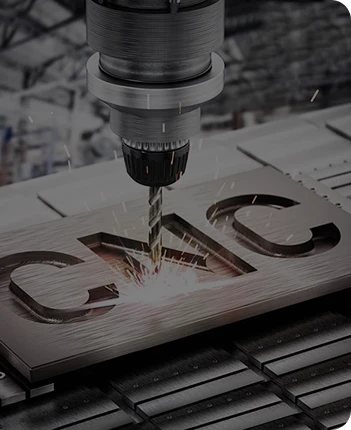
Before you compare stainless grades, you need to define the actual working condition of the part. That is the difference between a part that passes inspection and a part that returns from the customer after one month. In stainless steel machining services, the material choice affects cycle time, tool life, burr formation, and final cost almost as much as the CNC program itself.
Stainless Steel Machining Services: What Users Must Know Before Choosing a Grade
- Will the part see moisture, salt, chemicals, or cleaning agents?
This determines whether standard corrosion resistance is enough or whether you need higher molybdenum content, as in 316/316L. - Does the part need repeated turning, milling, threading, or deep hole drilling?
If yes, machinability matters. For example, 303 typically machines faster than 304 because sulfur improves chip breaking. - Is the part load-bearing or wear-sensitive?
If yes, hardness after heat treatment may matter more than corrosion resistance, which often points toward 410/420 or precipitation-hardening grades. - What surface finish is required?
A sealing face at Ra 0.8 μm has a different machining plan than a cosmetic bracket. - What is the annual or monthly volume?
A low-volume prototype might justify a premium grade, while mass production often favors better machinability and lower tool wear.
Typical stainless steel machining services data show that machinability can vary significantly. In shop-floor testing, 303 can reduce machining time by roughly 15% to 25% versus 304 in certain turning operations, mainly because chips break more predictably. However, 303 sacrifices some corrosion resistance, so it should not be used in chloride-heavy environments unless the design allows it.
Stainless Steel CNC Machining Services: Key Questions to Answer First
To choose the correct stainless steel grade for CNC parts, prepare the following before you ask for quotes or start sampling. This is especially important for stainless steel CNC machining services and custom stainless steel machining projects.
Stainless Steel Machining Services: Materials, Tools, and Prerequisites
Write down whether the part is structural, decorative, fluid-contact, high-pressure, wear-prone, or hygienic. A valve body and a camera mount should not use the same selection logic.
1. Define the Part Function
Include tolerances, GD&T, critical dimensions, thread specs, surface roughness, and heat-treatment notes. A tolerance of ±0.01 mm can change the material recommendation because some grades are more prone to distortion during machining.
2. Gather the Engineering Drawing
List exposure conditions such as seawater, disinfectants, acids, or outdoor humidity. For example, 304 performs well in many indoor applications, while 316 is commonly preferred for marine or chemical exposure because molybdenum improves pitting resistance.
3. Identify the Environment
Will the part be polished, passivated, welded, plated, or heat treated? Some grades respond better than others. For instance, 304 and 316 are commonly passivated after machining to restore corrosion resistance after machining-induced surface contamination.
4. Decide on Secondary Processes
Material cost is only part of the total. Tool wear, cycle time, and scrap rate can make a “cheap” material more expensive in production.
If you are comparing suppliers like Keywin, ask for a DFM review before production. A good DFM review can reduce unnecessary rework by catching issues such as over-tight tolerances, poor chip evacuation, or mismatched grade selection.
5. Confirm Budget and Lead Time
Below is a practical workflow used in real stainless steel machining services projects. Follow it in order. Each step reduces one major risk: corrosion failure, machining difficulty, or unnecessary cost.
How to Choose Stainless Steel Grades for CNC Parts: Step-by-Step Stainless Steel Machining Services Guide
Start with the environment, not the price. If the part is used in fresh water, food equipment, medical fixtures, outdoor hardware, or marine systems, the corrosion profile changes the grade selection immediately.
Example: A food equipment customer once requested 304 because it was available quickly. However, the part was used in a weekly chlorine-cleaning process. After 4 months, the surface finish showed discoloration and localized corrosion at threaded areas. The final solution was 316L, with passivation after machining. That reduced complaint returns from 6 per 1,000 units to zero in the next production run.
Rule of thumb:
- 304 / 304L: general-purpose corrosion resistance, indoor and mildly wet environments
- 316 / 316L: better choice for chlorides, salt spray, and chemical exposure
- 303: good when machinability is more important than maximum corrosion resistance
- 410 / 420: better for hardness and wear resistance after heat treatment
- 17-4 PH: used when high strength and corrosion resistance must coexist
Step 1: Define the Service Environment for Stainless Steel CNC Machining Services
Machinability influences cycle time, tool consumption, and final cost. In many factories, a grade that machines easier can save more than the material premium costs.
Real shop example: A small robotics company ordered 500 stainless spacers. The first attempt used 304, and the average turning cycle time was 4.8 minutes per part with tool insert changes after roughly 120 parts. After switching to 303, cycle time fell to 3.9 minutes per part, and insert life improved to about 150 parts before edge wear became unacceptable. Total part cost dropped by 14.6%.
Practical comparison:
- 303: best for machinability among common austenitic grades
- 304: versatile, but tougher on tools than 303
- 316: similar machining behavior to 304, often slightly more demanding
- 420: machinability depends heavily on heat treatment state
- 17-4 PH: good strength, but machining becomes more complex after aging
For high-volume stainless steel machining services, the machinability difference can affect ROI more than raw material price. A 20% faster cycle time on a 10,000-piece order can save dozens of machine hours.
Step 2: Match the Grade to Machinability in Stainless Steel Machining Services
If the part experiences mechanical load, friction, clamping force, or repeated contact, corrosion resistance alone is not enough. You need to know the minimum yield strength and hardness needed.
Engineering note: Annealed 304 typically has a yield strength around 205 MPa, while 17-4 PH in heat-treated conditions can exceed 900 MPa depending on the condition. That is a major difference when designing shafts, brackets, or load-bearing fittings.
User case: A packaging equipment maker used 304 for a locking pin because it “looked strong enough.” The pin bent after about 18,000 cycles. Switching to 17-4 PH increased service life to over 120,000 cycles in the same test environment. They did not change the geometry; only the grade and heat treatment.
Step 3: Check Strength, Hardness, and Wear Requirements
Stainless steel is not “corrosion proof.” It resists corrosion by forming a passive chromium oxide layer, but chloride ions, crevices, heat tint, and contamination can break that protection.
Data point: In salt spray testing, 316 usually outperforms 304 due to molybdenum content, which improves resistance to pitting corrosion. For parts near coastal environments, 316 is often selected when 304 shows early staining or pit initiation.
Choose this way:
- 304 if the environment is mildly corrosive and cost pressure is high
- 316 if chlorides, seawater mist, or cleaning chemicals are present
- 316L if weldability and reduced intergranular corrosion risk matter
- 440C or similar hardenable grades only if wear and hardness are critical
Step 4: Decide on Corrosion Resistance Needs
Some grades change properties significantly with heat treatment, and that changes the CNC plan. If the part will be heat treated after machining, you must plan for distortion, scale, and finish loss.
Example: A medical device customer machined 420 stainless blades to final dimensions before hardening. After heat treatment, blade thickness shifted by 0.03 mm on average, which caused 19% of the batch to fail fit checks. The corrected process was rough machine → heat treat → finish machine critical surfaces. Scrap dropped to 2%.
For stainless steel machining services, this step is often overlooked. Heat treatment may improve hardness but can increase the cost of final finishing if not planned early.
Step 5: Consider Heat Treatment and Dimensional Stability
Some parts are judged first by appearance, then by function. In food, medical, and consumer products, the surface must be smooth enough for cleaning and inspection.
Common targets:
- Ra 1.6 μm: common for many functional machined parts
- Ra 0.8 μm: used for sealing surfaces or higher-end visual requirements
- Mirror polishing: usually requires extra machining and finishing steps
A cosmetic enclosure project for Keywin required 316L because the customer needed consistent polishing after CNC milling. The first trial with 304 showed faint machining lines after finishing. 316L was not chosen because it was “better” in a generic sense; it was selected because the finishing result remained stable across batches.
Step 6: Evaluate Surface Finish and Cosmetic Requirements
Step 7: Balance Cost, Volume, and Supply Chain Risk
Material choice should fit the delivery plan. If your supplier can source 303 quickly but 316 with long lead times, that affects launch timing. Likewise, if the project is high volume, a slightly lower per-part cost can matter more than the initial quote.
Real case: An instrumentation buyer needed 8,000 stainless mounting blocks in six weeks. The original spec called for 316, but the actual environment was indoor lab use with occasional alcohol cleaning. After a review, the grade changed to 304, and the production plan became workable without changing the mechanical design. The order shipped on time, and field failure rate remained at 0% after 12 months.
Stainless Steel Machining Services: Grade Selection Cheat Sheet for Common CNC Parts
For Fixtures and Brackets
304 is often sufficient if the part is indoors and corrosion exposure is light. Use 316 if the fixture is near chemicals, washdown, or coastal air.
For Shafts, Pins, and Wear Components
Choose 420, 440C, or 17-4 PH when hardness and wear resistance matter more than easy machining. If corrosion resistance is still important, 17-4 PH is often a practical middle ground.
For Valves, Fluid Parts, and Threaded Fittings
316L is commonly used because of chloride resistance and welding compatibility. For threaded parts, the grade must also allow stable thread cutting without tearing.
For Prototypes and Small Batches
304 or 303 is often a better starting point because it shortens lead time and simplifies manufacturing. If the prototype is intended for a harsh environment, test the final grade early rather than assuming it later.
For Medical and Food-Contact Parts
316L is frequently preferred because it supports cleaning, passivation, and corrosion resistance in repeated wash cycles. Surface finish consistency is critical.
Common Errors in Stainless Steel Machining Services and How to Fix Them
- Choosing 304 for chloride exposure
Problem: early pitting or tea staining.
Fix: move to 316/316L and improve passivation. - Using 316 when machinability is the main priority
Problem: longer cycle time and higher tooling cost.
Fix: consider 303 if the environment allows it. - Ignoring heat treatment effects
Problem: dimensional shift after hardening.
Fix: machine in stages and leave finishing allowance. - Not specifying surface roughness
Problem: the part passes dimensions but fails function or cleaning requirements.
Fix: state Ra targets on the drawing. - Over-specifying the alloy
Problem: unnecessary cost and longer lead times.
Fix: align the grade with actual service conditions, not worst-case assumptions alone.
In many stainless steel machining services projects, the biggest savings come from removing unnecessary requirements. A grade upgrade that raises material cost by 18% can also increase machining cost by another 10% if the part becomes harder to cut.
Stainless Steel Machining Services: Practical Case Studies from Real Projects
Case 1: Marine Sensor Housing
A customer needed a CNC-machined sensor housing for a dockside monitoring system. The first prototype used 304. After eight weeks, the housing showed surface corrosion near the threaded cap. The team switched to 316L, added passivation, and changed the thread design to reduce crevices. Field life increased from under 3 months to more than 18 months in the same location.
Case 2: Automated Food Conveyor Part
A food-processing customer used 303 for a moving support part because they wanted faster machining. That worked for production speed, but the cleaning chemicals were too aggressive. After a review, the final production version moved to 316L. Although cycle time increased by about 8%, contamination risk dropped, and the customer passed hygiene inspection on the first audit.
Case 3: High-Load Robotics Joint
A robotics startup wanted a stainless pivot component with tight tolerances and long wear life. 304 failed early because of deformation under repeated torque. The redesign used 17-4 PH, heat treated to a stronger condition, and the part survived over 100,000 cycles in testing. Keywin supported the design change with a machining plan that preserved critical bore size after aging.
Summary and Suggestions for Choosing Stainless Steel Grades for CNC Parts
The best stainless steel grade for CNC parts is the one that fits your environment, machining process, mechanical load, and finish target. Do not start from the alloy name alone. Start from the failure mode you want to avoid. For simple indoor parts, 304 may be enough. For chloride exposure, 316 or 316L is usually safer. For easier machining, 303 can reduce cycle time. For wear and hardness, consider 410, 420, or 17-4 PH. In professional stainless steel machining services, the right material choice can reduce tool wear, improve surface finish, and cut scrap rates by double digits.
If you are working with a supplier such as Keywin, ask for a DFM review, machining test, and surface specification before placing the full order. That is often the lowest-cost way to prevent corrosion failures, tolerance drift, and rework.
Semantic reminder: Good material selection, stable surface finish, and reliable corrosion resistance are the three factors that decide whether your CNC part succeeds in production.
FAQ: Stainless Steel Machining Services and Grade Selection
1. What is the best stainless steel grade for CNC parts?
There is no single best grade. 304 is common for general use, 316 is better for chloride exposure, 303 is easier to machine, and 17-4 PH is useful when strength is critical.
2. Is 303 stainless steel good for CNC machining?
Yes, 303 is one of the easiest stainless steels to machine because of its sulfur content. It is often chosen for turned parts, but it is not the best option for harsh corrosion environments.
3. Why is 316 more expensive than 304?
316 contains molybdenum, which improves corrosion resistance, especially in chloride environments. The alloy cost is higher, and machining may be slightly more demanding.
4. When should I use 316L instead of 316?
Use 316L when welding is involved or when you want lower carbon content to reduce the risk of intergranular corrosion after heat exposure.
5. Can stainless steel parts be heat treated after CNC machining?
Yes, but you need to plan for dimensional change and possible surface oxidation. Some grades, such as 17-4 PH and 420, are often heat treated as part of the process.
6. How do I reduce machining cost for stainless steel parts?
Choose a grade that matches the environment rather than over-specifying. Improve chip evacuation, reduce unnecessary tolerances, and discuss process optimization with your stainless steel machining services supplier.
7. Why do my stainless steel parts rust after machining?
Common causes include free iron contamination, poor passivation, heat tint, or the wrong grade for the environment. Cleaning and passivation usually help, but the alloy must still match the application.
8. Can Keywin help select the right stainless steel grade?
Yes. Keywin can support grade selection, DFM review, CNC process planning, and finishing recommendations so the material choice matches the part’s actual working conditions.