How to Choose the Right Material for CNC Parts
Jan.01, 1970
At Keywin, we help you choose the right CNC material with clear, actionable steps so you can reduce machining risk, improve part performance, and move from prototype to production efficiently. If you are searching for How to Choose the Right Material for CNC Parts, this guide will walk you through a simple, practical process that helps you avoid costly material mistakes, shorten lead time, and achieve stable quality in metal cnc services.
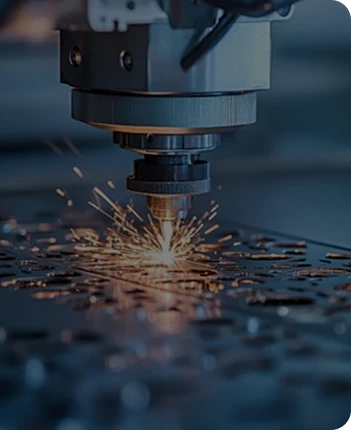
When we work on CNC projects, material choice is never just a procurement decision. It directly affects machinability, tolerance stability, surface finish, wear resistance, corrosion resistance, and total manufacturing cost.
A poor material choice can cause:
- Excessive tool wear
- Poor chip evacuation
- Warping after machining
- Surface defects
- High scrap rate
- Delayed assembly
In real production, choosing the wrong alloy can increase rework by 20% to 40%, especially when tight tolerances such as ±0.01mm are required. That is why How to Choose the Right Material for CNC Parts should always start with performance requirements, not just price.
Why material selection matters more than most teams expect
We recommend beginning with the end-use environment. Ask three questions:
- What load will the part carry?
- Will it face heat, moisture, chemicals, or abrasion?
- Does it need high dimensional stability or cosmetic appearance?
This step keeps the material selection process aligned with engineering reality. For example, if a bracket must support repeated mechanical load, an aluminum alloy may be acceptable only if the design allows enough section thickness. If the part runs in a corrosive environment, stainless steel or a coated alloy may be a better fit.
When we evaluate How to Choose the Right Material for CNC Parts, we always map the application first, then match the alloy to the load case.
Start with the part’s function before you look at the material price
Not every material behaves the same under CNC milling, turning, drilling, or tapping. Some machine cleanly and hold tight tolerance; others require slower feeds, specialized tooling, and more process control.
Match the material to the machining method and tolerance requirement
- Cutting speed and feed rate
- Chip formation and chip breakability
- Thermal expansion
- Work hardening tendency
- Burr formation
- Dimensional stability after stress relief
For precision parts, especially in metal cnc services, we typically verify whether the material can hold 0.01mm precision under the chosen process route. This is especially important for thin-wall components, threaded housings, and mating interfaces.
Common machinability factors we check
Below is a simple material selection table we use during early design review.
| Material | Main advantages | Common limitations | Typical use cases |
|---|---|---|---|
| Aluminum 6061 | Lightweight, good machinability, cost-effective | Lower strength than steel | Enclosures, brackets, fixtures |
| Aluminum 7075 | High strength, good fatigue resistance | More expensive, lower corrosion resistance than 6061 | Aerospace parts, structural components |
| Stainless Steel 303 | Excellent machinability, good corrosion resistance | Lower strength than 304 in some conditions | Shafts, fasteners, precision fittings |
| Stainless Steel 304 | Strong corrosion resistance, versatile | Harder to machine than aluminum | Food equipment, medical housings |
| Stainless Steel 316 | Superior corrosion resistance, marine-grade | Higher cost, slower machining | Marine, chemical, outdoor parts |
| Brass | Excellent machinability, good appearance | Heavier, softer than steel | Connectors, valves, decorative parts |
| Titanium Grade 5 | High strength-to-weight ratio, corrosion resistant | Difficult machining, higher cost | Aerospace, medical, high-end applications |
| Engineering plastics (POM, PEEK, PA) | Lightweight, insulation, chemical resistance | Lower temperature resistance in some grades | Insulators, wear parts, prototypes |
If you are learning How to Choose the Right Material for CNC Parts, this comparison is one of the fastest ways to narrow the field before requesting a quote from Keywin.
Compare the most common CNC materials in a practical way
In professional manufacturing, we never rely on vague descriptions like “high quality aluminum” or “premium stainless steel.” We validate materials against recognized standards.
Use standards to validate material quality, not just supplier claims
- ASTM for material composition and mechanical properties
- DIN for dimensional and engineering specifications
- ISO for process and quality management requirements
- RoHS and REACH when compliance is required
For example:
- Aluminum alloys can be checked against ASTM material grades
- Stainless steel material certificates can confirm chemistry and traceability
- Incoming inspection can support 100% inspection for critical dimensions and surface conditions
This is a key part of How to Choose the Right Material for CNC Parts because it reduces supply-chain uncertainty and protects downstream assembly quality.
Standards we commonly reference
A low-cost material can become expensive if it increases machining time, tool consumption, or rejection rate. We always evaluate the full cost stack:
- Raw stock price
- Machining cycle time
- Tool life
- Secondary finishing cost
- Inspection cost
- Scrap and rework risk
- Delivery delay impact
For many buyers, the true cost of material shows up after production begins. A material that machines 15% faster and holds tighter tolerances can outperform a cheaper alloy overall.
That is why How to Choose the Right Material for CNC Parts must be calculated as a total manufacturing decision, not a procurement shortcut.
Consider cost in total lifecycle terms, not only raw material price
Here is a practical selection path we often recommend.
Choose the right material by application scenario
We usually start with:
- Aluminum 6061 for general-purpose parts
- Aluminum 7075 for higher strength applications
These are common in metal cnc services because they balance machinability and mechanical performance.
If your priority is lightweight structure
We usually consider:
- Stainless Steel 304
- Stainless Steel 316 for harsher environments
These grades are often selected for outdoor, marine, and chemical exposure.
If your priority is corrosion resistance
We may recommend:
- Brass for moderate wear
- POM or PEEK for engineered plastic components
- Hardened steel where load and abrasion are severe
If your priority is wear resistance and low friction
We often review:
- Titanium Grade 5
- 7075 aluminum
- Specialized alloy steels
This is where How to Choose the Right Material for CNC Parts becomes highly application-specific, because each option affects machining strategy and cost differently.
If your priority is premium strength-to-weight ratio
To make the decision simple, we follow a structured workflow.
A step-by-step process we use at Keywin
We collect:
- Load range
- Operating temperature
- Exposure to corrosion or chemicals
- Friction and wear conditions
- Cosmetic requirements
Step 1: Define the working conditions
We mark:
- Mating surfaces
- Threaded holes
- Sealing faces
- Bearing seats
- Flatness and concentricity requirements
Step 2: Identify critical dimensions and tolerance zones
We check:
- Tensile strength
- Yield strength
- Hardness
- Thermal stability
- Corrosion resistance
- Machinability rating
Step 3: Match material properties to performance needs
We confirm:
- Tooling availability
- Feed and speed strategy
- Burr control
- Surface finish target
- Post-processing needs
Step 4: Validate manufacturability
We align:
- Material certificate
- ASTM/DIN reference
- First article inspection
- In-process inspection
- Final 100% inspection for critical items
Following this workflow makes How to Choose the Right Material for CNC Parts much easier and reduces surprises during production.
Step 5: Confirm compliance and inspection plan
Visual reference: material choice at a glance
This visual can help teams quickly compare material families before locking the specification.
Common challenges during material selection and how we solve them
Even with a clear process, problems can still arise.
Challenge 1: The design looks strong, but machining becomes unstable
Thin walls and deep cavities can cause vibration, chatter, or deformation.
How we solve it:
- Adjust wall thickness
- Modify toolpath strategy
- Use fixture optimization
- Select a more stable alloy
Challenge 2: The material meets strength requirements but is too hard to machine
Some high-strength alloys increase cycle time and tool wear.
How we solve it:
- Review machinability before final approval
- Use coated carbide tools
- Reduce aggressive cutting parameters
- Consider a more machinable equivalent
Challenge 3: The part passes dimensional inspection but fails in real use
This usually happens when environmental conditions were not fully considered.
How we solve it:
- Recheck operating environment
- Upgrade corrosion-resistant grade
- Apply anodizing, passivation, or plating
- Test against real service conditions
These issues are common in metal cnc services, which is why How to Choose the Right Material for CNC Parts must include both design and production thinking.
Tools and resources that improve material selection efficiency
To speed up decision-making, we recommend the following:
- CAD models for geometry review
- CAM software for machinability planning
- Material datasheets for mechanical property comparison
- Supplier mill certificates for traceability
- Surface roughness gauges for finish verification
- Micrometers, calipers, and CMM for dimensional control
- Salt spray testing where corrosion validation is required
- Hardness testers for incoming and post-process checks
When teams use these tools properly, they can shorten development cycles and reduce quotation revisions. In our experience, a well-documented material selection process can cut engineering clarification time by 30% or more.
Why businesses choose Keywin for CNC material selection
At Keywin, we support customers with practical engineering input, stable process control, and transparent quality management. We understand that How to Choose the Right Material for CNC Parts is not only about selecting a grade; it is about ensuring the part performs reliably in production and in the field.
Our approach includes:
- Fast response within 24 hours
- Material recommendation based on function and machinability
- Precision manufacturing to 0.01mm
- Full traceability for key materials
- Inspection reports for critical dimensions
- Support for prototypes and batch production
For buyers comparing suppliers, this level of support makes metal cnc services easier to source and far less risky.
Key takeaways to act on now
If you want a fast path to the right decision, follow these points:
- Define the part’s function and environment first.
- Match material properties to mechanical and chemical requirements.
- Check machinability before you lock the specification.
- Verify standards such as ASTM and DIN.
- Build an inspection plan for critical dimensions.
- Compare lifecycle cost, not raw material cost alone.
- Work with a partner like Keywin that can support both engineering and production.
If you are currently evaluating How to Choose the Right Material for CNC Parts, the best next step is to send your drawing, tolerance requirements, and application conditions to Keywin. We can help you identify the most suitable material, reduce manufacturing risk, and move forward with confidence in your metal cnc services project.
In short, choosing the right CNC material becomes much easier when you follow a structured process, validate against standards, and use expert manufacturing support from Keywin.