Tips for Improving Titanium Machining Quality and Efficiency
Sep.03, 2026
Titanium machining quality and efficiency are often the two biggest pain points for manufacturers that need tight tolerances, stable surface finish, and predictable cycle times. If you work with metal cnc services, titanium CNC machining services, or precision titanium parts machining, you already know that titanium can increase tool wear, raise heat at the cutting zone, and create chip evacuation problems that slow production. The good news is that these issues are manageable. By choosing the right tool path, cutting parameters, coolant strategy, and workholding setup, shops can reduce scrap, extend tool life, and improve throughput in real production scenarios such as aerospace brackets, medical implants, and high-strength structural components.
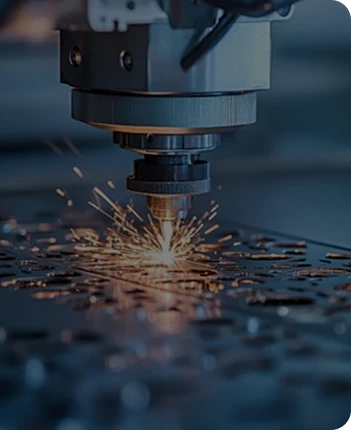
According to Sandvik Coromant's machining guidance, titanium alloys retain strength at elevated temperatures and conduct heat poorly compared with many steels, which means much more heat stays near the tool edge instead of leaving with the chip. Sandvik also notes that this is a primary reason for rapid tool wear in titanium machining. In practical terms, shops that control heat, vibration, and chip thickness usually see fewer broken inserts and more consistent dimensions. For example, many manufacturers use high-pressure coolant, optimized radial engagement, and rigid fixturing to stabilize cutting in long-run titanium jobs. Keywin supports these requirements with this reference image for titanium machining and related metal cnc services.
Why Titanium Machining Is Difficult in Metal CNC Services
Titanium is valuable in aerospace, medical, and energy applications because of its high strength-to-weight ratio and corrosion resistance. However, those same properties create problems in machining. Titanium alloys such as Ti-6Al-4V are widely used, but they also tend to generate high cutting temperatures, low thermal conductivity, and strong work-hardening behavior. These characteristics make cutting force control and temperature management central to successful metal cnc services.
ASM International and major cutting tool manufacturers consistently highlight three titanium machining issues: heat concentration at the cutting edge, built-up edge formation under poor cutting conditions, and tool deflection when unsupported wall thickness is low. That is why one shop may achieve stable tool life on a 20 mm thick block while another struggles on a thin-walled aerospace part with the same alloy. The process must be matched to geometry, machine rigidity, and production target.
For companies outsourcing titanium CNC machining services, the key question is not whether titanium can be machined. It can. The real question is how to machine it with measurable consistency, such as lower cycle time, fewer tool changes, and a tighter Cp/Cpk target in repeated production runs.
Tip 1: Use the Right Tool Material and Geometry for Titanium CNC Machining Services
Choose tools built for low heat retention and stable cutting in metal cnc services
Quick answer to why: Titanium cuts best when the tool edge stays sharp and the chip is evacuated cleanly, because dull tools raise heat and shorten tool life fast.
Operation method: For titanium CNC machining services, use carbide tools designed for titanium alloys, preferably with wear-resistant coatings such as TiAlN or AlTiN where appropriate. Select variable helix and variable pitch end mills to reduce chatter. Use shorter flute length whenever the part geometry allows it, because excessive overhang increases deflection. For turning, choose insert geometries that support positive rake and strong edge preparation.
Industry toolmakers such as Kennametal, Seco, and Sandvik Coromant consistently recommend avoiding general-purpose geometry when machining titanium. The reason is simple: titanium is not a "one size fits all" material. For example, a fine-pitch roughing tool can help in a deep pocket, while a stronger edge may be better on a face-milling pass with heavy engagement. In actual metal cnc services, the wrong geometry often causes edge chipping within a short runtime, while the correct geometry can extend tool life significantly across a batch.
Suitable for: Aerospace and medical parts, thin-wall features, deep cavities, and shops trying to reduce insert consumption in repeat production.
Tip 2: Optimize Cutting Parameters to Balance Speed and Tool Life
Set cutting speed, feed, and depth correctly for precision titanium parts machining
Quick answer to why: Titanium machining becomes unstable when cutting speed is too high or feed is too low, because rubbing increases heat and accelerates wear.
Operation method: Start with conservative surface speed and then increase gradually while monitoring tool wear, chip color, and spindle load. Maintain enough feed per tooth so the cutter slices the material instead of rubbing it. In many titanium CNC machining services, shallow radial engagement combined with consistent feed can outperform aggressive full-width cutting because it keeps chip thickness stable and reduces edge temperature.
Research and toolmaker guidance agree that titanium benefits from controlled chip load rather than high speed alone. For example, when machining Ti-6Al-4V, many shops target lower surface speed than they would for aluminum, because excessive spindle speed can cause rapid flank wear. Practical production data from machining guides published by major suppliers show that stable chip load is a stronger performance factor than simply increasing RPM. In other words, an extra 15 percent speed increase can backfire if tool life drops by 40 percent and you need more tool changes.
When using metal cnc services for production runs, define the target based on the real cost per part, not just the shortest cycle time. A process that cuts one minute faster but doubles insert usage usually increases total cost.
Suitable for: High-volume production, cost-sensitive batches, and teams that need a controlled balance between throughput and tool wear.
Tip 3: Improve Coolant Delivery and Chip Evacuation in Metal CNC Services
Use high-pressure coolant and chip control strategies for titanium machining quality
Quick answer to why: Titanium keeps heat in the cutting zone, so coolant and chip evacuation directly affect tool life, surface finish, and dimensional stability.
Operation method: Use high-pressure coolant when the machine and tool design support it. Aim coolant at the cutting zone, not just the work area, and verify that chip flow exits the pocket or hole rather than recutting. For deep holes and internal features, use through-tool coolant whenever possible. If the part design creates chip packing, adjust peck cycles, toolpaths, or flute length to prevent chip re-cutting.
According to machining recommendations from manufacturers such as Sandvik Coromant and Mitsubishi Materials, effective coolant in titanium is not only about lowering temperature. It also helps break chips and transport them away from the cutter. In practical shop conditions, chip packing can damage a tool much faster than normal wear. A stable coolant setup may not look dramatic, but it often reduces unplanned tool failure and produces a more consistent surface profile over the full batch.
For metal cnc services that run multi-shift production, coolant concentration and nozzle positioning should be checked routinely. A nozzle shifted a few millimeters away from the cut can create enough heat buildup to shorten tool life noticeably over hundreds of parts.
Suitable for: Deep pockets, hole drilling, internal cavity parts, and production environments where chip recutting has already caused scrap.
Tip 4: Increase Rigidity with Better Workholding and Machine Setup for Titanium CNC Machining Services
Reduce vibration and deflection in metal cnc services for thin-wall or long-reach parts
Quick answer to why: Titanium parts often deform or chatter when the setup is not rigid enough, especially with thin walls, tall features, or long tool overhangs.
Operation method: Use the shortest possible tool overhang, verify spindle condition, minimize fixture stack-up, and apply supports where the part geometry allows it. For thin-wall aerospace components, soft jaws, custom fixtures, or vacuum support can be more effective than standard vises. In milling, use toolpaths that keep engagement constant and avoid sudden changes in load that trigger vibration.
Machine tool builders and cutting tool publishers repeatedly emphasize rigidity as a critical factor in titanium machining. The reason is mechanical: when the tool or part deflects, the cutter takes a varying chip load, and that variation destroys surface finish and dimensional accuracy. A setup that reduces vibration by even a modest amount can improve consistency across a batch and reduce secondary finishing work.
For example, in precision titanium parts machining, a part with a 1.0 mm wall can distort under clamping force if the fixture is not designed properly. Shops handling these jobs through metal cnc services often find that a better fixture is cheaper than compensating with extra inspection and rework later.
Suitable for: Thin-wall parts, long-reach milling, aerospace housings, and any job where chatter marks or taper issues have already appeared.
Tip 5: Apply High-Efficiency Toolpaths for Better Metal CNC Services Output
Use adaptive milling and constant-engagement strategies in titanium CNC machining
Quick answer to why: Toolpaths that keep cutting load stable can reduce peak force, extend tool life, and shorten actual machining time.
Operation method: Use adaptive roughing, trochoidal milling, or other constant-engagement strategies when the CAM system and machine allow it. Avoid burying the cutter in corners with full-width engagement. Keep step-over, radial depth, and entry strategy consistent so the cutter does not repeatedly shock-load. When roughing titanium, a controlled path often performs better than a traditional aggressive path because it maintains predictable chip thickness.
This method is widely supported by CAM vendors and machining technology publications because it reduces stress on both the cutter and spindle. In production metal cnc services, adaptive toolpaths can also reduce non-cutting time by improving motion efficiency. The key is not only to cut faster, but to cut more evenly. A smoother load profile often lowers tool breakage risk and improves the finish left for semi-finishing and finishing passes.
If your shop provides titanium CNC machining services for recurring parts, record the actual spindle load, tool life, and surface finish after each toolpath revision. That data is more useful than subjective impressions. Keywin recommends comparing cycle time and tool consumption together, because a path that saves 12 percent cycle time but increases insert cost by 18 percent may not improve total output.
Suitable for: Complex pockets, high-mix production, and manufacturers that want to lower cycle time without sacrificing tool reliability.
Tip 6: Control Quality with In-Process Inspection and Data Tracking
Use measurement feedback to stabilize precision titanium parts machining in metal cnc services
Quick answer to why: Titanium machining issues often appear gradually, so early inspection prevents scrap before a full batch is lost.
Operation method: Measure critical dimensions during the process instead of waiting until the end of the run. Use probing, tool wear offsets, SPC charts, and first-article approval for any part with tight tolerance or expensive material. Track tool life by cutting time, not only by part count, because titanium machining loads vary by geometry and depth of cut.
In authoritative quality systems, in-process inspection is one of the most effective ways to reduce scrap rate because it catches drift before it becomes a lot-wide problem. This matters in titanium machining because dimensional drift can be caused by tool wear, thermal growth, or workholding movement. A process that identifies a tool offset change after the first 5 parts instead of after the first 50 can save a substantial amount of material cost, especially when the material is titanium.
For metal cnc services serving aerospace or medical markets, data recording is often as important as machining itself. ISO 9001 and similar quality systems favor traceability, and many customers expect documented first-piece approval, tool life records, and inspection reports. That documentation also makes future titanium CNC machining services easier to optimize.
Suitable for: Tight-tolerance aerospace, medical, and defense parts, as well as repeat jobs where traceability and batch consistency matter.
How to Choose the Right Titanium Machining Strategy for Your Scenario
Not every titanium part needs the same process. The best approach depends on part shape, tolerance, and volume.
- If the part is thin-walled: prioritize rigidity, custom fixtures, and lower cutting forces.
- If the part has deep pockets or holes: prioritize coolant delivery, chip evacuation, and tool reach control.
- If the job is high volume: prioritize tool life consistency, adaptive toolpaths, and in-process inspection.
- If the job is high value and low volume: prioritize first-article validation, conservative parameters, and documentation.
- If the job has strict cosmetic requirements: prioritize vibration control, finishing strategy, and stable tool wear monitoring.
In practice, shops that offer metal cnc services should match the process to the part instead of forcing one standard method across every titanium job. A job shop making a single medical prototype may choose slower but safer settings, while a contract manufacturer running hundreds of aerospace parts may invest in dedicated fixtures and high-pressure coolant to reduce cost per part. The right decision is the one that fits the actual production scenario.
Practical Summary for Metal CNC Services Buyers and Machining Teams
Improving titanium machining quality and efficiency is not about one trick. It is about combining the right tool, correct parameters, stable coolant, rigid fixturing, efficient toolpaths, and consistent inspection. When these elements work together, manufacturers can reduce heat-related wear, stabilize tolerance, and make titanium machining more predictable.
For buyers evaluating titanium CNC machining services, ask whether the supplier can show tool life records, coolant strategy, fixture design, and inspection data. For machining teams, start with the biggest bottleneck first. If the process is failing because of chatter, fix rigidity. If it is failing because of insert life, adjust geometry and cutting parameters. If the parts are inconsistent across a batch, implement in-process measurement and offset control.
According to the practical guidance used by Sandvik Coromant, Kennametal, and other established machining authorities, titanium machining success depends on controlling heat, load, and chip flow rather than forcing higher speed. That principle holds across aerospace, medical, and industrial production. Keywin applies the same logic in metal cnc services by focusing on stable process control, measurable quality data, and repeatable production performance.
FAQ About Titanium Machining Quality and Efficiency in Metal CNC Services
What makes titanium harder to machine than steel?
Titanium has lower thermal conductivity than many steels, so heat stays near the cutting edge longer. It also maintains strength at elevated temperatures, which increases cutting forces and tool wear if the process is not controlled.
Which tool coating is commonly used for titanium CNC machining services?
TiAlN and AlTiN are commonly used on carbide tools for titanium machining because they help improve heat resistance. However, coating choice should still match the cutter design, operation type, and coolant strategy.
Does high speed always improve titanium machining efficiency?
No. In many titanium operations, excessively high cutting speed shortens tool life and raises scrap risk. A better result usually comes from balanced feed, controlled engagement, and stable cooling.
How can a shop reduce chatter in titanium machining?
Reduce tool overhang, improve fixture rigidity, use variable helix cutters, and adopt constant-engagement toolpaths. If chatter remains, inspect spindle condition and clamp stability.
Is through-tool coolant necessary for all titanium parts?
Not for all parts, but it is especially valuable for deep holes, long-reach cutting, and chip-heavy pockets. It helps evacuate chips and control temperature in difficult operations.
What should buyers ask before ordering metal cnc services for titanium?
Ask about the supplier's experience with titanium alloys, fixture design, coolant capacity, inspection equipment, and quality documentation. Those factors are strong indicators of whether the shop can maintain repeatable results.