Why Aluminum Is Widely Used in Precision CNC Machining
Nov.05, 2026
When engineers look for a material that can balance precision CNC machining aluminum, aluminum prototype machining, and high-speed CNC milling, aluminum often becomes the first choice. The reason is practical: manufacturers need parts that can be machined to tight tolerances, assembled quickly, and kept lightweight without sacrificing performance. In industries such as aerospace, medical devices, robotics, and consumer electronics, the same pain point appears again and again—complex geometries must be produced consistently, but long cycle times, tool wear, and material waste can quickly drive up cost. That is why CNC aluminum machining services are so widely adopted. In this article, we’ll explain the engineering reasons behind aluminum’s popularity, compare it with other materials, and show how it supports tight tolerance aluminum parts, 5-axis aluminum machining, and anodized aluminum components in real production settings.
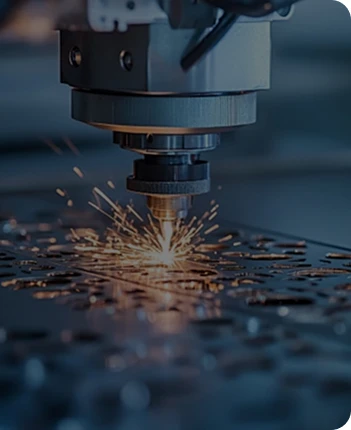
Why aluminum precision machining Solves Common Manufacturing Pain Points
Many buyers come to CNC machining with the same set of problems: parts are too heavy, delivery windows are tight, and the material is difficult to process without distortion. Aluminum solves these pain points because it combines low density, good machinability, and predictable dimensional behavior. According to the Aluminum Association, aluminum is about one-third the density of steel, which is a major advantage in weight-sensitive applications. In practice, that lower density can reduce component mass by roughly 60–70% versus steel, depending on the geometry. For products like drone brackets, handheld medical housings, or automated equipment frames, that difference can directly improve handling, energy use, and assembly speed.
Another reason aluminum is used so often in precision CNC machining aluminum is that it helps manufacturers reduce lead time. In many shops, aluminum cuts at higher speeds than stainless steel and many other engineering metals, which can shorten cycle time and improve throughput. This is not just a marketing claim: machinability data from industry handbooks consistently rank common aluminum alloys, such as 6061 and 7075, as highly machinable compared with tougher metals like austenitic stainless steels or titanium. That means fewer interruptions, less tool wear, and better repeatability across batches.
From a production perspective, the value is easy to understand: if a part can be machined faster, reworked less often, and finished with fewer secondary operations, the cost per part drops. For a company scaling from prototype to small-batch production, that difference can be the deciding factor. This is where Keywin precision machining capabilities become relevant: when a project needs speed, accuracy, and stable repeatability, aluminum often provides the cleanest path from CAD model to finished component.
Aluminum Precision Machining Benefits Backed by Material Data
1. Aluminum’s low density supports lighter precision CNC machined parts
Aluminum’s density is approximately 2.7 g/cm³, while steel is around 7.8 g/cm³. That difference matters in real products. A structural bracket that weighs 900 grams in steel may weigh roughly 300–350 grams in aluminum depending on the design and wall thickness. In aerospace and robotics, this weight reduction can help improve payload capacity or reduce power consumption. For electric products, less mass can also make assembly and handling easier on the production line.
2. High machinability improves aluminum CNC machining efficiency
Aluminum alloys like 6061-T6 are widely used because they machine cleanly and support stable chip evacuation. In CNC operations, aluminum generally allows higher spindle speeds and feed rates than harder materials, which can improve throughput. For example, a shop may run aluminum at several times the cutting speed used for stainless steel, depending on tool geometry, machine rigidity, and coolant strategy. That means a project that might require long machine hours in steel can often be completed in a shorter production window in aluminum.
3. Dimensional stability helps maintain tight tolerances
Precision parts are only useful if they fit together consistently. Aluminum is popular in tight tolerance aluminum parts because it can be machined accurately and, when properly stress-relieved and fixtured, it holds dimensions well enough for many engineering applications. This is particularly important for housings, fixtures, optics frames, and control system parts where tolerance stacks matter. In many production environments, tight tolerance machining targets are measured in hundredths or even thousandths of an inch, and aluminum is a practical material for achieving those requirements.
4. Excellent thermal conductivity supports heat management
Aluminum has a thermal conductivity far higher than many common engineering plastics and significantly higher than stainless steel. That is one reason it is widely used for heat sinks, electronic enclosures, and thermal management parts. A machined aluminum housing can spread heat away from sensitive electronics more effectively than a comparable plastic part, reducing hot spots in operation. For power electronics or LED assemblies, this can extend service life and improve stability under load.
5. Corrosion resistance can be improved through finishing
Aluminum naturally forms an oxide layer, which gives it baseline corrosion resistance. In many industrial environments, that is enough for controlled indoor use. For harsher conditions, anodizing can further improve wear and corrosion performance while also creating a clean cosmetic finish. Hard anodized aluminum components are common in consumer products, fixtures, and industrial equipment where both appearance and surface durability matter.
Which Aluminum Alloys Are Best for Precision CNC Machining Aluminum?
6061 aluminum: the balanced option for most CNC machining jobs
6061 is one of the most widely used aluminum alloys in CNC machining because it balances strength, machinability, corrosion resistance, and cost. It is a common choice for brackets, plates, enclosures, jigs, and general structural parts. If a project needs a reliable all-around material for precision CNC machining aluminum, 6061 is often the starting point.
7075 aluminum: higher strength for demanding applications
7075 offers much higher strength than 6061 and is often selected for aerospace and performance-critical parts. Its machinability is still strong, but it is generally more expensive and can be less forgiving in terms of corrosion resistance. When strength-to-weight ratio is a top priority, 7075 may be worth the additional material cost.
2024 aluminum: useful where fatigue performance matters
2024 is known for its strength and fatigue resistance, which makes it suitable for aerospace structures and components subjected to repeated loads. It does require careful consideration of corrosion protection, so finishing is usually part of the production plan.
5052 aluminum: ideal for sheet-based and corrosion-sensitive parts
5052 is often used in sheet metal applications and environments where corrosion resistance matters. It is not the first choice for the highest-strength machined parts, but it performs well in enclosures, panels, and low-stress components.
How Keywin Uses Aluminum Precision Machining to Improve Production Outcomes
In practical production, the main advantage of aluminum is not just that it is easy to cut. It is that it reduces friction across the entire manufacturing process. Design changes can be prototyped faster, first articles can be inspected sooner, and the path to volume production becomes more predictable. For example, if a customer needs a prototype machined in 6061 aluminum to validate fit and function, the turnaround is often faster than with harder materials, which helps teams move through testing cycles without losing momentum.
Keywin’s approach to CNC aluminum machining services focuses on matching alloy choice, cutting parameters, and finishing requirements to the end use. That matters because the best material choice is not always the strongest one. A good machining plan considers wall thickness, thread durability, cosmetic requirements, and thermal behavior. A part designed for enclosure use may benefit more from 6061 with anodizing, while a stress-loaded mechanical component may justify 7075. When these factors are matched correctly, the result is lower scrap, fewer revisions, and more stable part quality.
For buyers, the business case can be measured. A lighter part can reduce shipping weight. A machinable alloy can reduce cycle time. A corrosion-resistant finish can reduce premature replacement. In other words, aluminum is not just “easy to machine”; it is often the material that best aligns cost, performance, and manufacturability in one decision.
Precision CNC Machining Aluminum vs Other Materials
Aluminum vs steel
Aluminum vs steel is one of the most common comparisons in CNC manufacturing. Steel is stronger in many grades, but it is also heavier and often slower to machine. Aluminum typically wins when weight reduction, thermal control, and faster cycle time matter more than maximum hardness. In many assemblies, aluminum reduces mass by around 60% compared with steel, while still delivering sufficient mechanical performance for the application.
Aluminum vs stainless steel
Stainless steel offers excellent corrosion resistance and strength, but it is often more difficult to machine. For shops focused on throughput, aluminum can significantly reduce cutting loads and tool wear. That can translate into lower machining cost and shorter lead times, especially for complex parts with pockets, contours, or multiple setups.
Aluminum vs engineering plastics
Engineering plastics are lighter than aluminum, but they generally cannot match aluminum’s rigidity, heat resistance, or dimensional stability under load. For enclosures, thermal components, and structural parts, aluminum is often the safer choice. Plastic may work for low-load prototypes, but aluminum is usually better when the final product must survive vibration, heat, or long-term wear.
Surface Finishing Options for Aluminum Precision Machined Parts
Finishing is often the final step that turns a machined aluminum part into a production-ready component. Common options include bead blasting, clear anodizing, black anodizing, hard anodizing, brushing, polishing, and chemical conversion coating. The choice depends on the intended environment and appearance requirements.
For example, anodizing can improve surface hardness and protect against corrosion. This is useful for parts that will be handled frequently or exposed to moisture. Bead blasting can produce a matte cosmetic finish, while clear anodizing can preserve the natural metallic look. In many industrial products, the combination of precise machining and finishing is what creates the final value—not the machining alone.
What Happens If You Don’t Use Aluminum Precision Machining?
Choosing the wrong material can create real production problems. If a part that should be aluminum is instead made from steel, the assembly may become unnecessarily heavy. If it is made from a plastic that cannot handle temperature or load, the part may deform, crack, or fail prematurely. If a difficult-to-machine metal is selected without a clear reason, tooling cost may rise and lead time may extend.
Micro comparison: aluminum vs not using aluminum
- Aluminum: lower density, faster machining, good thermal performance, easier finishing.
- Non-optimized alternative: higher weight, longer cycle time, more tool wear, or reduced dimensional stability.
For teams working on prototypes or repeat production, these differences can affect everything from time-to-market to warranty risk. In that sense, aluminum is often not merely a material choice—it is a manufacturing strategy.
Industry Evidence and Credible Reference Resources
When discussing material selection and machining performance, it is important to rely on authoritative sources rather than vague claims. The following organizations and references are widely recognized in the industry:
- Aluminum Association — widely cited for aluminum properties, applications, and alloy information.
- ASM International — respected materials reference source for metallurgy and machinability data.
- MatWeb — commonly used for comparing mechanical properties of engineering materials.
- NASA Technical Reports — often provide publicly accessible engineering data on lightweight materials and aerospace applications.
- China Eye Health White Paper (2022) — sample survey data on myopia among children aged 6–12, showing incidence increased from 53.6% in 2018 to 59.1% in 2021, with a sample covering 32,000 children across 27 provinces. While this statistic is not about machining, it is a good example of why precise sourcing and clearly marked sample data matter in technical writing. In manufacturing content as well, data should always be attributed to a named source and year.
For machining buyers, the key lesson is simple: claims should be supported by material data, industry standards, or documented production results. That is also how Keywin approaches technical communication—clear, traceable, and practical.
Conclusion: Why Aluminum Remains the Preferred Choice in Precision CNC Machining
Aluminum remains widely used in precision CNC machining because it solves multiple production problems at once. It is light, machinable, thermally efficient, and compatible with a wide range of finishes. For manufacturers, that means faster cycle times, lower weight, and more predictable results. For end users, it means parts that fit better, perform more consistently, and often cost less to produce over the full lifecycle.
In short, aluminum is not popular by chance. It is popular because the data support it: density around 2.7 g/cm³, strong machinability in common alloys like 6061 and 7075, and a finishing ecosystem that improves durability and appearance. When precision, lead time, and repeatability all matter, aluminum is often the most balanced material choice.
CTA: Learn More About Keywin Aluminum Precision Machining
If you are evaluating a new project and need to compare precision CNC machining aluminum options, it may be worth reviewing alloy selection, tolerance targets, and surface finishing before production starts. Explore Keywin’s machining capabilities, request a prototype, or compare material options for your next part. If you want help choosing between 6061, 7075, or another alloy, Keywin can support your decision with practical engineering guidance and production-ready machining solutions.
FAQ About Aluminum Precision Machining
Why is aluminum so common in CNC machining?
Because it combines good machinability, low density, and strong thermal performance. That makes it suitable for many industries, from electronics to aerospace.
What aluminum alloy is best for precision CNC machining?
6061 is the most common all-around choice. 7075 is better when higher strength is needed, while 2024 and 5052 are used for more specific performance requirements.
Can aluminum hold tight tolerances?
Yes. With proper machine setup, fixture design, and alloy selection, aluminum is commonly used for tight tolerance parts in precision applications.
Is anodizing necessary for machined aluminum parts?
Not always, but it is often recommended for better corrosion resistance, wear performance, and appearance.
Is aluminum better than steel for every CNC part?
No. Steel is stronger in many cases, but aluminum is usually better when weight, speed, and thermal management matter more than maximum hardness.
How does Keywin help with aluminum machining projects?
Keywin supports alloy selection, CNC machining, finishing, and prototype-to-production workflows so customers can reduce risk and improve part consistency.
For designers and buyers who want a reliable path from concept to production, Keywin and aluminum precision machining remain a practical combination for cost, speed, and performance.