Applications of Precision CNC Milling for Complex Parts
Sep.24, 2026
Precision CNC milling is one of the most trusted ways to make complex parts with tight tolerances, smooth surfaces, and repeatable quality. For overseas buyers and distributors, the main pain points are often accuracy, lead time, part complexity, and stable mass production. Precision CNC milling solves these problems by turning digital designs into parts with high consistency. It is widely used in tight tolerance machining, multi-axis machining, and complex component manufacturing. For brands like Keywin, this process helps deliver parts that fit, function, and perform as expected.
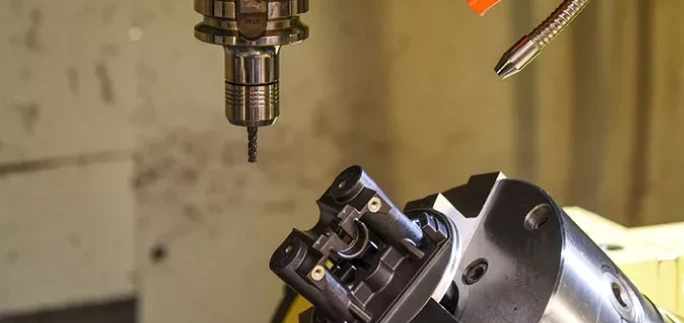
As industries move toward lighter structures, smaller assemblies, and higher performance, the demand for complex parts continues to rise. Many customers need parts with thin walls, deep pockets, curved surfaces, and multiple features in one setup. The best solution is often precision CNC milling because it offers strong control over geometry, surface quality, and batch repeatability. The image below shows the kind of precision and part quality that buyers expect from a professional CNC milling supplier like Keywin.
Search intent from Google shows that buyers usually want three things: where CNC milling is used, what materials and tolerances are possible, and how to choose a reliable factory. This article answers those questions with a simple structure, clear examples, and practical comparison tables. If you are looking for a supplier for complex metal or plastic parts, this guide will help you understand why precision CNC milling is often the first choice.
1. Why precision CNC milling is ideal for complex parts
Complex parts often need holes, slots, angles, pockets, and contoured surfaces. CNC milling can machine many of these features in one program and sometimes in one setup. This reduces manual handling and lowers the chance of error. For buyers, fewer setups usually mean better accuracy and more stable delivery.
1.1 One setup can create many features
In many industries, even a small size error can cause assembly failure. Precision CNC milling can achieve very tight tolerance control when the process, machine, and inspection system are well managed. This makes it a strong choice for parts that must fit with bearings, housings, shafts, connectors, and medical or aerospace assemblies.
1.2 It supports tight tolerance machining
Many overseas buyers start with samples and small batches, then move to larger repeat orders. CNC milling supports this path very well. The same digital program can be used for prototypes, pilot runs, and mass production, which helps keep the part consistent across different order sizes.
| Buyer Need | Why Precision CNC Milling Helps | Typical Result |
|---|---|---|
| High accuracy | Computer controlled cutting follows the CAD model | Better fit and less rework |
| Complex geometry | Multi-axis machining reaches difficult shapes | More features in fewer operations |
| Repeat orders | Programs and fixtures can be reused | Stable quality in repeated production |
| Fast development | Toolpaths can be updated quickly | Shorter sample lead time |
1.3 It works for low volume and high volume orders
2. Main applications of precision CNC milling for complex parts
Aerospace parts often have strict requirements for weight, strength, and accuracy. Precision CNC milling is used for brackets, structural parts, engine-related components, and interior hardware. Many of these parts have thin walls, special angles, and complex pockets. Reliable machining helps reduce weight while keeping strength where it matters.
2.1 Aerospace and aviation components
Medical products need clean surfaces, stable size control, and excellent repeatability. CNC milling is used for surgical tool bodies, device housings, fixture parts, and precision connectors. These parts often require smooth finishing and strict dimensional control. For this reason, high precision cnc milling is a key process in medical manufacturing.
2.2 Medical device parts
Automotive and electric vehicle parts need durability and stable performance under vibration, heat, and load. CNC milling is common for sensor housings, battery system parts, motor brackets, transmission-related components, and custom test parts. As EV design becomes more compact, complex machining demand continues to increase.
2.3 Automotive and EV components
Machine builders and equipment manufacturers often need parts with large size, multiple holes, and special mounting features. CNC milling supports custom machine bases, flanges, blocks, covers, and tooling fixtures. These parts must usually match with other components in the production line, so accuracy is critical.
2.4 Industrial machinery parts
Electronics and semiconductor systems often require small, precise, and clean parts. CNC milling is used for heat sinks, frames, mounting blocks, enclosures, and test fixtures. Many of these parts have tight spacing and fine details. A stable process helps protect performance and assembly quality.
2.5 Electronics and semiconductor parts
Robotic systems need parts with high positional accuracy and good surface finish. CNC milling is widely used for arms, joints, plates, housings, and custom end-effector parts. Complex motion systems often rely on parts that are strong, light, and precisely machined.
| Industry | Common CNC Milled Complex Parts | Main Requirement |
|---|---|---|
| Aerospace | Brackets, structural parts, housings | Light weight and tight tolerance |
| Medical | Device bodies, tool parts, fixtures | Clean finish and repeatability |
| Automotive | Mounts, covers, sensor housings | Durability and production stability |
| Industrial machinery | Blocks, plates, machine bases | Strength and dimensional accuracy |
| Electronics | Heat sinks, enclosures, frames | Precision and small feature control |
2.6 Robotics and automation components
3. Which complex part features are best suited for CNC milling
Thin walls are common in aerospace, robotics, and electronics. These features reduce weight but increase machining risk. Precision CNC milling can handle them if tool selection, cutting speed, and fixture design are correct. A good factory will balance rigidity and material removal carefully.
3.1 Thin walls and lightweight structures
Deep pockets are difficult because tool reach becomes limited and chip removal becomes harder. CNC milling is suitable when the process uses proper tooling and step-down strategies. This helps avoid tool wear, surface marks, and part deformation.
3.2 Deep pockets and cavities
Many complex parts include curved or organic surfaces. These are common in molds, medical parts, consumer products, and industrial designs. Multi-axis machining can make these surfaces with better accuracy and less manual polishing.
3.3 Curved surfaces and freeform shapes
Parts that must align with other assemblies need hole position accuracy. CNC milling is useful for parts with many drilled or milled holes because the machine follows programmed coordinates. This is important for fixtures, housings, mounting plates, and connector parts.
3.4 Multiple holes and precise alignment features
Some parts combine slots, bosses, threads, pockets, and contours in one body. CNC milling is ideal for these parts because it can complete many operations in a controlled sequence. This reduces machining time and lowers assembly risk.
3.5 Mixed features in one part
4. Material choices for precision CNC milling
Aluminum is one of the most popular CNC milling materials because it is lightweight, easy to machine, and cost efficient. It is often used for housings, brackets, frames, and thermal parts. For many complex parts, aluminum offers a strong balance between speed, strength, and surface finish.
4.1 Aluminum alloys
Stainless steel is used when strength, corrosion resistance, and wear resistance matter. It is common in medical, food equipment, marine, and industrial applications. CNC milling stainless steel usually takes more time than aluminum, but the final part is strong and stable.
4.2 Stainless steel
Titanium is chosen for high performance applications where weight reduction and strength are both needed. It is widely used in aerospace and medical parts. Titanium is harder to machine, so supplier experience matters a lot. A skilled factory can control heat, tool wear, and surface quality effectively.
4.3 Titanium
Brass and copper are often used for electrical parts, connectors, and thermal components. They machine well and can achieve excellent surface finish. These materials are a good choice when conductivity or appearance is important.
4.4 Brass and copper
Plastics such as POM, PEEK, nylon, and PTFE are used for insulation, low friction, and chemical resistance. CNC milling plastic parts requires careful control because some plastics can warp or melt if the process is not stable. With proper settings, the result can be very clean and accurate.
| Material | Machinability | Main Advantage | Typical Use |
|---|---|---|---|
| Aluminum | Excellent | Fast machining and low weight | Housings, brackets, frames |
| Stainless steel | Medium | Strength and corrosion resistance | Medical, food, industrial parts |
| Titanium | Challenging | High strength to weight ratio | Aerospace, medical implants |
| Brass | Excellent | Good finish and conductivity | Electrical and decorative parts |
| Engineering plastics | Good | Low friction and insulation | Fixtures, bushings, enclosures |
4.5 Engineering plastics
5. How precision CNC milling improves quality and lowers risk
Digital control makes it easier to hold stable dimensions from part to part. This matters when buyers need parts that fit into assemblies without repeated adjustment. Precision CNC milling can reduce the risk of mismatch, especially for complex parts with many features.
5.1 Better dimensional control
Manual machining may be suitable for simple work, but complex parts often need higher repeatability. CNC milling reduces operator variation by following a fixed program. This improves consistency and makes quality easier to manage across batches.
5.2 Less manual error
Professional suppliers use measuring tools such as calipers, micrometers, height gauges, CMM systems, and surface testers. This creates a clear quality record. For overseas buyers, traceable inspection reports are valuable because they support incoming quality checks and reduce disputes.
5.3 Faster inspection and traceability
When parts are machined accurately, assembly becomes easier and faster. This can reduce rework, part rejection, and customer complaints. In many projects, the real value of CNC milling is not only in making the part but also in improving the whole product assembly process.
5.4 Lower assembly failure rate
The following process is a simple view of how a professional factory like Keywin handles precision CNC milling projects for complex parts.
Process flow:
1. Receive CAD drawings or samples
2. Review material, tolerance, and surface requirements
3. Plan machining method and toolpath
4. Select fixtures, tools, and machine type
5. Run first article sample machining
6. Measure critical dimensions and adjust if needed
7. Start batch production after approval
8. Inspect final parts and prepare packaging
Simple flow chart:
Drawing review -> Process planning -> Tool and fixture setup -> Sample machining -> Inspection -> Production -> Final quality check -> Shipment
6. Step-by-step process flow for complex CNC milling parts
Complex parts cannot depend on one machine alone. The full workflow decides whether the final part will meet the drawing. Good process control helps prevent issues such as tool marks, chatter, warping, or out-of-tolerance holes.
6.1 Why this process matters
Ask about material availability, tolerance capability, surface finish options, inspection method, and sample lead time. These questions help you compare suppliers more effectively. A good supplier should answer clearly and support the project with practical advice.
6.2 What buyers should ask before order confirmation
| Method | Best For | Strength | Limitation |
|---|---|---|---|
| Precision CNC milling | Complex parts with accurate geometry | High accuracy and flexibility | Tooling time for very high volumes |
| Casting | Large volume simple shapes | Low cost per part at scale | Less precision and more finishing |
| Sheet metal fabrication | Enclosures and bent parts | Fast and cost efficient | Limited 3D complexity |
| 3D printing | Early prototypes and special forms | Fast design validation | Surface and strength limits |
For many complex parts, CNC milling is the best balance of precision, material choice, and production flexibility. It is especially strong when buyers need real metal performance, repeatability, and a controlled finish. In many projects, it is more practical than casting or printing because the final part can be used directly with less post-processing.
7. Precision CNC milling vs other manufacturing methods
8. What Google users want to know before choosing a CNC milling supplier
A professional supplier should review your file and point out any risk areas before production. This includes thin walls, tight corners, deep holes, and tolerance conflicts. Good engineering review can save time and reduce cost.
8.1 Can the factory handle my drawing?
Material selection affects cost, durability, appearance, and machining speed. A reliable supplier should help you choose the best option based on function, not only price. This is especially important for complex parts where performance matters.
8.2 Can they make my part in the right material?
Repeatability is one of the biggest concerns for overseas buyers. A strong factory should use fixed programs, stable fixtures, and clear inspection records. This makes future orders more predictable and lowers business risk.
8.3 Can they keep quality stable in repeat orders?
Many distributors need quick samples, urgent replacements, or special custom parts. Flexible production planning is a major advantage. When a supplier can respond quickly, the customer can keep projects moving.
8.4 Can they support custom and urgent orders?
Keywin focuses on high precision CNC milling for complex parts with strict quality demands. The company works with overseas buyers and distributors who need stable quality, clear communication, and practical engineering support. For buyers, the biggest value is not only machining ability, but also the ability to reduce risk from drawing review to final shipment.
Keywin supports a wide range of applications, including aerospace, medical, automotive, robotics, industrial equipment, and electronics. The company understands that global customers want more than a low price. They want reliable tolerances, correct materials, smooth surfaces, and consistent batch production. This is why process control and inspection are at the center of every project.
9. Why overseas buyers choose Keywin for complex precision CNC milling
10. Key takeaways for complex part buyers
10.1 Precision CNC milling is a top solution for complex geometry
It is especially useful when parts have many features, tight tolerances, or difficult shapes.
10.2 The right material and process matter as much as the machine
Good results depend on engineering review, tool selection, fixture design, and inspection.
10.3 A reliable supplier reduces total project risk
The best partner helps improve fit, lower rejection, and support repeat production.
10.4 Buyers should evaluate both capability and communication
Clear feedback, sample support, and stable quality control are key for overseas orders.
In short, the applications of precision CNC milling for complex parts are broad, practical, and highly valuable for global buyers. If your project needs accuracy, repeatability, and strong manufacturing support, precision CNC milling is often the best path. Keywin is ready to support custom complex parts with a professional approach that helps customers move from drawing to finished product with confidence.