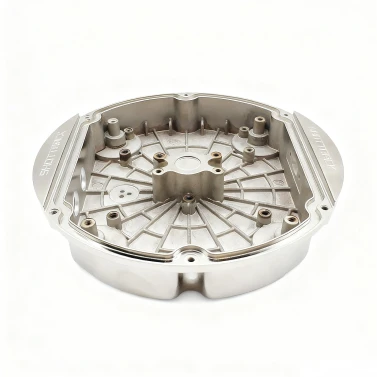
Choosing a CNC Supplier for Automotive Prototypes and Production
Jan.01, 1970
When buyers search for choosing a CNC supplier for automotive prototypes and production, they usually want practical guidance, not generic marketing. The top Google blog posts in this topic typically focus on supplier qualification, automotive quality requirements, prototyping-to-production transition, lead time, cost control, material and tolerance capability, and risk reduction. In other words, the purchasing group is trying to answer one question: how do we choose a supplier who can deliver oem cnc machining parts on time, within tolerance, and at the right cost, without creating quality or supply-chain risk?
This article is written to match that intent. It follows a step-by-step evaluation process, includes the tools and documents buyers need, and highlights the mistakes to avoid when selecting a CNC supplier for automotive prototype and production work. If your team is comparing vendors for OEM CNC machining, Keywin and the technical resources at https://www.keywinmade.com/storage/watermark/f_imgs/20260519/37ae5ba6b74481b890ec0408cbb72300.webp can help you move from early-stage prototypes to stable production with less risk.
Define the Part Requirements Before You Contact Any Supplier
Step 1: Confirm the part function and vehicle application
Before you request quotes, define exactly what the part must do in the vehicle. Automotive buyers often lose time because they ask for pricing too early, before the supplier understands the part function. A CNC supplier for automotive prototypes and production needs more than a drawing. They need to know whether the part is structural, cosmetic, thermal, fluid-handling, or assembly-critical.
- Identify the vehicle system: powertrain, chassis, battery enclosure, interior, exterior, or test fixture.
- Define the loading condition: static load, vibration, fatigue, temperature, corrosion, or impact.
- State whether the part is for prototype validation, pilot build, or full production.
- Clarify whether the part is customer-facing or hidden inside the assembly.
Step 2: Collect the technical inputs the supplier needs
A strong OEM CNC machining supplier can only quote accurately when the technical package is complete. Buyers should gather all relevant files and specifications before issuing RFQs. Missing information often causes inaccurate pricing, delayed reviews, and rework.
- 3D CAD model in STEP, IGES, or native format.
- 2D engineering drawing with dimensions and tolerances.
- Material specification, including grade and standard.
- Surface finish requirements such as anodizing, plating, polishing, painting, or coating.
- Quantity by phase: prototype, validation, pilot, and production.
- Inspection requirements, including PPAP, FAI, CMM report, or material certification.
Common mistakes to avoid in this stage
- Sending only a 3D file and no drawing.
- Leaving out tolerance stack-up requirements.
- Forgetting to state the target annual volume.
- Not explaining whether the part is cosmetic or functional.
- Changing the design after quotation without informing every supplier.
Check Whether the Supplier Can Support Prototype and Production Requirements
Step 3: Verify machining capability from first article to mass production
Many suppliers can make a prototype, but fewer can scale that same part into repeatable production. Automotive buyers should confirm that the supplier has both engineering flexibility and process stability. The supplier must be able to machine the prototype quickly, then repeat the same critical characteristics at production volume.
- Ask which CNC equipment they use for milling, turning, multi-axis machining, and finishing.
- Confirm whether they can handle both low-volume and medium-to-high-volume orders.
- Ask how they manage process consistency from sample parts to production lots.
- Review whether they support fixture design, process optimization, and DFM feedback.
Step 4: Match the supplier’s material capability to automotive needs
Automotive components often require metals and plastics with specific mechanical, thermal, and corrosion properties. A capable supplier should demonstrate experience with the most common OEM CNC machining materials and understand how each material affects cutting stability, dimensional control, and surface quality.
- Aluminum alloys for lightweight structural and enclosure parts.
- Stainless steel for corrosion resistance and high-strength applications.
- Carbon steel and alloy steel for load-bearing components.
- Engineering plastics for test parts, interior components, and lightweight assemblies.
- Titanium or specialty alloys for demanding applications.
Step 5: Confirm tolerance and surface finish capability
Automotive prototype parts may tolerate minor adjustment, but production parts must meet consistent dimensional targets. Buyers should verify that the supplier can hold the tolerances required for mating surfaces, sealing surfaces, bearing features, and assembly interfaces.
- Ask for the supplier’s typical tolerance range by process and material.
- Check whether they have in-house inspection equipment, such as CMM and height gauges.
- Review examples of surface finish results on similar automotive parts.
- Confirm whether cosmetic surfaces receive special handling during machining and packing.
Common mistakes to avoid in this stage
- Assuming prototype capability automatically means production capability.
- Ignoring material-specific machining limitations.
- Not checking whether the supplier can support critical tolerances consistently.
- Choosing the cheapest quote without verifying process control.
- Overlooking surface finish expectations for visible parts.
Evaluate Quality Systems, Inspection, and Automotive Compliance
Step 6: Review the supplier’s quality management system
For automotive purchasing groups, quality is not optional. The supplier should be able to show how they control incoming material, in-process inspection, final inspection, nonconformance handling, and traceability. A strong quality system reduces launch risk and protects the vehicle program.
- Ask whether they are certified to ISO 9001 or automotive-relevant standards.
- Review their inspection workflow from raw material to shipment.
- Ask how they handle corrective actions and process deviations.
- Check whether traceability is maintained by lot, batch, or serial number.
Step 7: Ask for real inspection data, not only promises
Good suppliers can show actual records from past projects. Buyers should request sample inspection reports and ask how the supplier measures and documents critical dimensions. This is especially important for OEM CNC machining parts that must pass assembly checks or functional validation.
- FAI reports for first article validation.
- Material certificates for raw stock verification.
- Dimensional inspection reports for critical features.
- Process capability evidence if production quantities are required.
- Packaging and labeling records for traceability.
Step 8: Confirm how the supplier handles change control
Automotive projects evolve quickly. A supplier must be able to manage engineering changes without confusion. Buyers should understand how the supplier receives revised drawings, updates tooling or programs, and separates old revisions from new ones.
- Ask how they control drawing revisions.
- Confirm how they label approved samples versus new revisions.
- Review their process for implementation of ECN or drawing changes.
- Check whether they notify buyers before making substitutions.
Common mistakes to avoid in this stage
- Focusing only on price and ignoring quality evidence.
- Accepting a supplier who cannot provide inspection documentation.
- Not confirming revision control before production release.
- Assuming all suppliers use the same inspection standards.
Compare Lead Time, Cost Structure, and Engineering Support
Step 9: Compare quotation details line by line
Buyers often compare only the unit price, but the real decision should be based on the total cost structure. A low quote may hide tooling, setup, inspection, finishing, or freight costs. The best supplier is the one that gives transparent pricing and can explain the cost drivers.
- Compare material cost, machining cost, finishing cost, and packaging cost.
- Check whether tooling, programming, or setup fees are included.
- Review lead time for samples and lead time for production quantity.
- Ask about expedited service and its impact on cost.
Step 10: Evaluate engineering support and DFM capability
In automotive programs, supplier engineering support is often just as important as the machine shop itself. A capable CNC supplier should be able to flag manufacturability issues early and propose practical improvements that reduce cost, improve strength, and stabilize production.
- Ask whether they provide design for manufacturability feedback.
- Review if they can recommend better tolerances where appropriate.
- Check whether they suggest alternative materials when needed.
- Confirm their ability to support prototype iteration before final release.
Step 11: Confirm supply reliability and production scalability
Automotive purchasing teams need suppliers who can keep delivering even when demand increases or schedules shift. A supplier should have enough machine capacity, labor, and planning discipline to support future production without disrupting current orders.
- Ask about monthly capacity and peak load handling.
- Review their subcontracting policy.
- Check whether they maintain backup equipment or alternate process plans.
- Ask how they manage on-time delivery performance.
Common mistakes to avoid in this stage
- Choosing the lowest price without understanding hidden costs.
- Ignoring the value of DFM support during prototype development.
- Failing to ask how the supplier handles schedule changes.
- Not checking whether the supplier can scale from pilot to production.
Run a Structured Supplier Audit Before Final Approval
Step 12: Audit the factory and communication process
Before final supplier approval, buyers should perform a structured audit or virtual review. The goal is to verify that the supplier’s shop floor, engineering team, and communication process can support your program. This step helps prevent surprises after the first order is placed.
- Review machine condition and maintenance practices.
- Check the cleanliness and organization of the production area.
- Observe how jobs move from programming to machining to inspection.
- Evaluate responsiveness, technical clarity, and documentation quality.
Step 13: Test the supplier with a pilot order
For automotive prototypes and production, a pilot order is often the best way to validate the supplier before full commitment. Start with one part family or a limited quantity, then assess quality, timing, and communication before expanding the relationship.
- Select a representative part with real technical challenges.
- Track whether the supplier meets promised delivery dates.
- Measure first-pass yield and rework rate.
- Review packing quality and shipment accuracy.
- Assess how quickly they respond to questions and revisions.
Step 14: Score suppliers using a decision matrix
A formal scorecard helps purchasing teams avoid emotional or price-only decisions. The matrix should reflect what matters most to the program, including technical capability, quality, lead time, cost, communication, and scalability.
- Technical capability: 25 percent
- Quality and inspection: 25 percent
- Lead time and delivery: 20 percent
- Cost and transparency: 15 percent
- Communication and responsiveness: 10 percent
- Scalability and support: 5 percent
Common mistakes to avoid in this stage
- Skipping the audit because the price looks attractive.
- Approving a supplier based on sales claims only.
- Skipping pilot builds and moving straight to production.
- Using no scorecard, which makes the decision subjective.
Use the Right Buyer Checklist, Tools, and Documents
Required tools and documents for supplier selection
Purchasing teams move faster when they use a clear evaluation toolkit. These items help standardize supplier comparison and reduce decision errors during OEM CNC machining sourcing.
- CAD files and controlled drawings.
- RFQ template with revision number and quantity schedule.
- Supplier scorecard for side-by-side comparison.
- Inspection checklist for sample validation.
- Project timeline with sample, pilot, and production milestones.
- Material and finishing specification sheet.
- Nonconformance and corrective action log template.
Step-by-step buyer workflow
Use the following process to keep supplier selection organized and repeatable.
- Collect all design files and technical requirements.
- Shortlist suppliers with relevant automotive experience.
- Send a complete RFQ package to each supplier.
- Compare technical response, price, and lead time.
- Request sample parts or pilot parts for validation.
- Review inspection reports and communication quality.
- Audit the best candidate or conduct a virtual factory review.
- Approve the supplier for prototype or production release.
- Monitor delivery, quality, and response after the first order.
Common mistakes to avoid with buyer tools
- Using inconsistent RFQ formats across suppliers.
- Letting different departments send conflicting requirements.
- Not recording supplier responses in a comparison matrix.
- Failing to keep revision history and approval records.
Select a Supplier That Can Grow With Your Automotive Program
Step 15: Choose for long-term program support, not just the first order
The best CNC supplier is not only the one that wins the prototype. It is the one that can stay with the program as the design matures, volumes rise, and quality expectations become stricter. For automotive buyers, this means selecting a partner who can support both engineering iteration and stable production release.
- Can the supplier respond quickly to design changes?
- Can they maintain quality as volumes increase?
- Can they support multiple part numbers and repeat orders?
- Do they communicate proactively when risks appear?
What a strong OEM CNC machining partner should deliver
A capable supplier should reduce buyer workload rather than create more of it. When the partnership is working well, the supplier helps improve manufacturability, stabilizes quality, and keeps the program moving. That is why many automotive teams prefer to work with partners like Keywin for OEM CNC machining, especially when the project requires a smooth transition from prototype to production.
- Fast response to RFQs and engineering questions.
- Accurate prototyping and controlled production release.
- Clear inspection records and traceability.
- Stable lead times and transparent communication.
- Support for both small runs and scalable production demand.
Final mistakes to avoid before approval
- Choosing a supplier only because the quote is the lowest.
- Ignoring the need for long-term process stability.
- Overlooking communication quality during the sampling stage.
- Failing to verify that prototype success can be repeated in production.
In automotive sourcing, the right supplier decision starts with a clear part definition, continues through capability and quality checks, and ends with a disciplined pilot-to-production validation process. If your team is looking for a practical partner for oem cnc machining, the safest path is to choose a supplier that can prove technical capability, document quality, and scale with your program. Keywin is built for that kind of support, from early prototype work to repeatable production, and you can review more details at https://www.keywinmade.com/storage/watermark/f_imgs/20260519/37ae5ba6b74481b890ec0408cbb72300.webp.