What Materials Can Be Processed by CNC Drilling?
Sep.09, 2026
CNC Drilling Service is now a core process in manufacturing because it helps turn design files into accurate holes with less manual error. If you are searching for CNC drilling service, custom CNC drilling for metal parts, or precision CNC hole drilling, the real question is usually not just “Can it drill?” but “What materials can be processed, what hole quality can be kept, and what part size is realistic?” That is where this guide helps.
In modern factories, CNC drilling is used to make repeatable holes for parts in aerospace, electronics, automotive, medical devices, furniture hardware, and industrial equipment. Compared with hand drilling, CNC systems can keep hole position within tight tolerance, often at the micron or sub-millimeter level depending on machine setup, tool condition, and material type. According to common machining references such as Sandvik Coromant machining data and CNC process guidelines from manufacturing education sources, hole quality is strongly affected by material hardness, chip evacuation, spindle speed, and coolant control. In real production, this means the same drilling program can work well on aluminum but fail on hardened stainless steel unless the process is adjusted.
For buyers, this matters because a wrong material choice can increase scrap, tool wear, and rework cost. For example, softer metals may allow faster cycle time, while composite or hardened materials may need slower feeds and special drills. In one production case shared in machining industry technical notes, using the correct tool geometry can improve tool life by more than 20% and reduce hole burrs significantly. That is why understanding what materials can be processed by CNC drilling is the first step before placing an order.
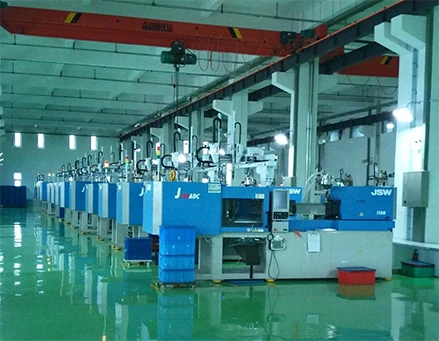
What Materials Can Be Processed by CNC Drilling? A Clear Definition
CNC drilling is a computer-controlled machining process that uses a rotating drill bit to create precise holes in a workpiece. “CNC” stands for Computer Numerical Control. The machine follows a digital program, so hole depth, location, diameter, and pattern can be repeated with high consistency.
In simple words, CNC drilling is used whenever you need:
- Accurate hole position
- Repeated hole patterns
- Clean hole edges
- Fast production across many parts
Industry term analysis
- Spindle speed: how fast the drill rotates
- Feed rate: how quickly the tool enters the material
- Tolerance: the allowed size or position error
- Burr: the sharp edge left after drilling
- Chip evacuation: removing cut material from the hole
These terms matter because every material reacts differently under drilling pressure and heat.
CNC Drilling Service Material List: What Can Be Processed?
A professional CNC drilling service can process many types of materials, but each one has its own machining window.
1. Aluminum and aluminum alloys
Aluminum is one of the easiest materials for CNC drilling.
Why it works well:
- Low cutting resistance
- Good heat dissipation
- Fast drilling speed
- Clean hole edges
Typical use cases:
- Electronic housings
- Lightweight brackets
- Automotive components
- Aerospace non-structural parts
Practical note:
Aluminum often allows higher spindle speed and faster feed than steel. In many workshops, aluminum drilling can run much faster than stainless steel while keeping good hole quality. Industry machining guides often show aluminum as a high-efficiency drilling material because chip removal is easier and tool wear is lower.
2. Carbon steel and mild steel
CNC drilling is widely used on carbon steel parts.
Why it is common:
- Strong and stable
- Easy to source
- Suitable for machine parts and frames
Challenges:
- Higher cutting force than aluminum
- More heat during drilling
- Burrs may form at exit holes
Good for:
- Structural brackets
- Fixture plates
- Machine bases
- General industrial parts
A common production improvement is using the right coated drill bit and coolant. This can help reduce tool wear and improve hole consistency.
3. Stainless steel
Stainless steel can be processed by CNC drilling, but it is harder than aluminum and often harder than mild steel.
Main difficulty:
- Work hardening
- High heat generation
- Faster tool wear
Suitable applications:
- Medical device parts
- Food equipment
- Marine components
- Corrosion-resistant fittings
According to machining literature, stainless steel often needs lower speed, controlled feed, and strong coolant flow. If not managed well, hole quality may drop and the drill may wear quickly.
4. Brass and copper
Brass and copper are often drilled for precision hardware and conductive parts.
Advantages:
- Good machinability
- Stable hole quality
- Suitable for small precision holes
Uses:
- Electrical connectors
- Plumbing components
- Decorative fittings
- Valve parts
Because these materials are softer, they can usually be drilled with good speed and smooth surface finish.
5. Titanium alloys
Titanium can be processed, but it is not an easy material.
Main concerns:
- Low thermal conductivity
- Heat stays near the cutting zone
- Tool wear increases fast
Used in:
- Aerospace parts
- Medical implants
- High-performance industrial parts
Titanium drilling often requires specialized tools and careful parameter control. In aerospace machining references, titanium is treated as a high-difficulty material because heat management is critical.
6. Plastics and engineering plastics
Many plastics can also be processed by CNC drilling.
Examples:
- Acrylic
- Polycarbonate
- POM
- Nylon
- ABS
Applications:
- Covers
- Insulating parts
- Consumer product components
- Prototypes
Important point:
Plastics can crack, melt, or deform if drilling speed and feed are not balanced. Tool sharpness matters a lot here.
7. Wood and composite panels
CNC drilling is also used for furniture and panel processing.
Common materials:
- MDF
- Plywood
- Particle board
- Fiberboard composites
Used in:
- Cabinets
- Furniture assembly holes
- Door panels
- Interior parts
For these materials, edge quality and chip extraction are key. Dust control is also important.
8. Carbon fiber and composite materials
Yes, CNC drilling can process certain composites, but this requires special care.
Problems to manage:
- Delamination
- Fiber pull-out
- Dust and wear
- Heat buildup
Common applications:
- Aerospace panels
- Sports equipment
- Advanced industrial parts
Special drill bits and stable clamping are often needed to protect the material structure.
CNC Drilling Service Material Capability by Industry Scenario
Different industries choose different materials based on strength, weight, heat resistance, and cost. Here is how CNC drilling fits real production needs.
Aerospace
Aerospace uses aluminum alloys, titanium, and composites because these materials balance weight and strength.
Why drilling matters:
- Fastener holes must match exact position
- Poor hole quality can affect assembly safety
- Repeated drilling accuracy is important
Aviation parts often require tighter process control than ordinary industrial parts. Even a small hole error can affect fitting.
Automotive
Automotive factories use CNC drilling for steel, aluminum, and plastics.
Examples:
- Engine mounts
- Sensor brackets
- Interior panels
- Battery-related components
Because vehicle production needs scale and consistency, CNC drilling is useful for batch work. It can help keep output stable across many parts.
Electronics
Electronics parts often use aluminum, brass, copper, and engineering plastics.
Why CNC drilling is valuable:
- Small holes need accuracy
- Connector positions must line up
- Heat-sensitive parts need controlled machining
Medical devices
Medical components often require stainless steel, titanium, and plastic parts.
Important requirements:
- Clean edges
- High repeatability
- Surface finish control
- Traceable production
Furniture and cabinetry
In furniture production, CNC drilling supports fast hole pattern creation.
Common materials:
- MDF
- Plywood
- Particle board
- Solid wood panels
This helps improve assembly speed and reduce manual layout errors.
What Makes CNC Drilling Important? Brief Advantages With Data Logic
The main value of CNC drilling is not only speed. It is also about consistency, cost control, and part quality.
1. Better repeatability
Manual drilling depends heavily on operator skill. CNC drilling follows a program, so the same hole pattern can be repeated part after part.
In production terms, repeatability helps lower variation and reduce assembly problems.
2. Higher production efficiency
For batch parts, CNC drilling can process holes faster than hand methods once the program is ready. That is especially true for parts with many holes in fixed positions.
3. Lower scrap risk
When hole position is accurate, the chance of part rejection drops. In manufacturing, reducing scrap by even a few percent can save real cost over time.
4. Better compatibility with complex designs
Some designs need angled holes, multiple hole groups, or exact spacing. CNC systems can follow digital paths that are hard to do manually.
5. Material-specific optimization
Different materials can be drilled with different parameters:
- Aluminum: higher speed
- Stainless steel: lower speed, more cooling
- Plastics: sharp tools, careful heat control
- Composites: anti-delamination method
This makes CNC drilling flexible across many industries.
CNC Drilling Service Process: How Materials Are Actually Processed
If you want to place an order, it helps to understand the basic workflow.
Step 1: Confirm material type
The supplier needs to know whether the part is aluminum, steel, stainless steel, plastic, wood, or composite.
Why this matters:
- Material changes tool choice
- Material changes speed and feed
- Material changes cooling method
Step 2: Review drawing and hole requirements
The drawing should show:
- Hole diameter
- Hole depth
- Hole tolerance
- Hole location
- Thread requirement, if any
Step 3: Choose tool and process parameters
A shop will select:
- Drill bit type
- Coating
- Spindle speed
- Feed rate
- Coolant or dry cutting method
Step 4: Sample test or first article inspection
For important parts, a sample check is often done before full batch production.
Step 5: Batch drilling
The machine processes the parts according to the verified program.
Step 6: Quality inspection
Typical checks include:
- Hole diameter
- Position accuracy
- Burr level
- Surface finish
- Depth consistency
This workflow helps protect both the part and the production schedule.
Common Problems When Drilling Different Materials
A lot of buyers search for CNC drilling service because their previous parts had quality issues. Here are the most common ones.
Burrs at hole edges
Burrs often appear in metals, especially at exit holes.
How to reduce them:
- Use sharper tools
- Control feed speed
- Improve backing support
- Add deburring after drilling
Hole deviation
If the drill wanders, the hole may shift from its target location.
Causes:
- Poor clamping
- Dull tool
- Wrong starting point
- Material movement during drilling
Heat damage
This is common in stainless steel, titanium, and plastics.
Fixes:
- Lower speed
- Improve coolant
- Use better tool geometry
Delamination in composites
Composite layers may separate during drilling.
Fixes:
- Specialized drill bits
- Stable fixtures
- Reduced cutting force
Cracking in plastics
Too much heat or stress can crack acrylic and polycarbonate.
Fixes:
- Sharp tools
- Proper feed
- Avoid excess heat buildup
How to Choose the Right CNC Drilling Service for Your Material
If you are sourcing a supplier, do not ask only about price. Ask these questions first:
1. What materials do you process often?
A supplier with experience in your material is more likely to deliver stable quality.
2. What hole tolerance can you hold?
Ask for real tolerance capability, not only general promises.
3. Do you have experience with your industry?
Medical, aerospace, and electronics each have different requirements.
4. Can you share sample parts or process photos?
This helps you judge whether the factory understands your part type.
5. What inspection tools do you use?
Common tools include:
- Calipers
- Micrometers
- CMM
- Plug gauges
- Surface inspection tools
6. Can you support small batch and mass production?
Some jobs need prototypes first, then full production.
A reliable CNC drilling service should be able to explain these points clearly.
Suggested Picture Placement for Better SEO and Readability
You already have one image link above. For a stronger article layout, place images in these spots:
-
After the introduction
Use the main image to show drilling material capability. -
Near the material list section
Add a second image of drilled metal or plastic samples if available. -
Before the process section
Add a workflow image or machine setup photo.
This helps users understand the content faster and improves on-page engagement.
CNC Drilling Service FAQ
Q1: What materials can be processed by CNC drilling?
Most common materials include aluminum, steel, stainless steel, brass, copper, titanium, plastics, wood panels, and some composites.
Q2: Is stainless steel harder to drill than aluminum?
Yes. Stainless steel usually needs more careful speed control, better cooling, and stronger tools because it generates more heat and wears tools faster.
Q3: Can CNC drilling process plastic parts without cracking them?
Yes, but the tool must be sharp and the heat must be controlled. Materials like acrylic and polycarbonate need extra care.
Q4: Can CNC drilling handle very small holes?
Yes. Small hole drilling is possible, but tool choice, spindle stability, and chip removal become more important as hole size gets smaller.
Q5: Why do some holes have burrs?
Burrs often happen because of material type, dull tools, or poor parameter settings. Post-process deburring may be needed.
Q6: Can composite materials be drilled?
Yes, but special tools and methods are usually required to reduce delamination and fiber pull-out.
Q7: How do I know if a supplier is good for my material?
Ask about their past projects, tolerance control, inspection tools, and whether they have processed similar materials before.
Next Step: Read the User Guide or Request a Sample
If you are planning a CNC drilling project, the best next step is to read the user guide, confirm your material, and request a sample test before mass production. This can help you reduce rework and check whether the hole quality matches your drawing.
If you need support for CNC Drilling Service, precision drilling for aluminum parts, or custom CNC drilling for stainless steel, consider contacting Keywin for further understanding or a trial run. A short sample order is often the fastest way to confirm process fit, hole accuracy, and surface quality before larger production.
For buyers who want reliable results, starting with material confirmation and test drilling is the safest path. That is how you move from “Can it be drilled?” to “Can it be drilled well, every time?”