|
Metals
|
Characteristics
|
Common Grades
|
|
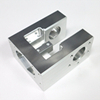 Aluminum Alloys
|
Lightweight, excellent formability, and good corrosion resistance. |
1060, 3003, 5052, 6061, 6063 |
|
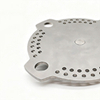 Stainless Steel
|
High corrosion resistance, excellent strength, and good weldability. |
201, 304, 316, 430 |
|
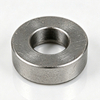 Carbon Steel
|
High strength, cost-effective, and widely used for structural parts. |
Q235, SPCC, SS400, A3 |
|
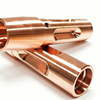 Brass
|
Good machinability, corrosion resistance, and attractive finish. |
C260, C360 |
|
 Titanium Alloys
|
High strength-to-weight ratio and excellent corrosion resistance for specialty applications. |
Grade 1, Grade 2 |
Custom Laser Cut Metal Parts We Manufacture
Laser Cut Brackets and Mounting Plates
We manufacture precision metal brackets, mounting plates, and connection components for machinery, automation equipment, and industrial assemblies.
These parts often require accurate hole positions, consistent external dimensions, and customized profiles for reliable installation.
Our laser cutting process supports multiple mounting holes, slots, and complex outlines within a single cutting operation.
Electrical Enclosure Panels
Keywin supplies laser-cut panels for electrical cabinets, control systems, electronic equipment, and industrial enclosures.
We process ventilation openings, cable entry holes, mounting slots, and custom panel contours according to engineering drawings.
For projects requiring formed panels or assembled housings, our sheet metal fabrication services combine laser cutting with bending, welding, and finishing.
Machine Covers and Protective Guards
Our laser cutting capabilities support custom machine guards, protective panels, access covers, and industrial equipment components.
Laser-cut openings, mounting features, and defined panel shapes help simplify subsequent fabrication and installation.
Structural Tube Components
We produce laser-cut tubular parts for equipment frames, mechanical structures, and custom metal assemblies.
Tube cutting can incorporate angled ends, slots, and connection features to support accurate positioning before welding or assembly.
For finished structural components, Keywin also provides precision welding services.
How We Maintain Laser Cutting Accuracy and Edge Quality
Cutting Parameter Optimization
Laser power, cutting speed, focal position, and assist gas influence edge quality, kerf width, and dimensional accuracy.
Our team selects suitable parameters according to material type, thickness, and design requirements.
Kerf Compensation
Laser cutting removes a narrow amount of material along the programmed path.
For precision components, kerf compensation helps maintain the required external dimensions, hole sizes, and cutout geometry.
Heat-Affected Zone Control
Laser cutting introduces localized heat, which can influence cut-edge characteristics and distortion, particularly on thin sheets and closely spaced features.
We review cutting paths, part geometry, and processing conditions to reduce unnecessary thermal effects.
Burr and Edge Quality Inspection
Cut edges are inspected for burrs, dross, irregularities, and other visible defects.
Where necessary, additional deburring or finishing operations can be performed according to the application.
Dimensional Inspection
Keywin follows a structured quality control process covering incoming material inspection, first article inspection, in-process sampling, and outgoing quality control.
We use CMMs, height gauges, and optical measuring equipment to verify applicable dimensions and drawing requirements.
Inspection reports can be provided according to project specifications.
Integrated Laser Cutting and Secondary Manufacturing
Keywin supports customers requiring additional processing after laser cutting.
Our integrated capabilities include:
-
CNC Bending: Forming laser-cut blanks into brackets, covers, enclosures, and folded sheet metal parts.
-
Welding and Assembly: Joining laser-cut sheets and tube components into complete structures.
-
CNC Machining: Secondary machining of precision holes, mounting surfaces, and mechanical features.
-
Surface Finishing: Deburring, polishing, anodizing, electroplating, and other available treatments.
-
Custom Assembly: Combining multiple components into finished assemblies according to customer drawings.
This coordinated production approach helps OEM customers simplify procurement and maintain consistent engineering requirements.