|
Metals
|
Characteristics
|
Common Grades
|
|
 Aluminum Alloys Aluminum Alloys
|
Lightweight, excellent machinability, and superior surface treatment compatibility.
|
6061, 7075, 5052, 2024, 6082, 6063, 2011, 5083, MIC6.
|
|
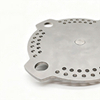 Stainless Steel Stainless Steel
|
High corrosion resistance, exceptional strength, and long-term stability.
|
303, 304, 316, 17-4PH,Duplex 2205
|
|
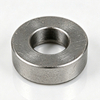 Carbon Steel Carbon Steel
|
High strength, stable processing, and excellent cost-efficiency.
|
1045 (45#), 1020,A36 (Q235), Q345.
|
|
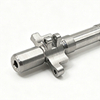 Alloy Steel Alloy Steel
|
Wear-resistant, high fatigue strength, and optimized mechanical properties post-heat treatment.
|
4140, 4340, D2, M2.
|
|
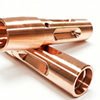 Brass Brass
|
Excellent machinability, corrosion resistance, and high dimensional precision.
|
C360, C260, C280.
|
|
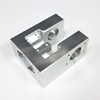 Zinc Alloys Zinc Alloys
|
Excellent fluidity, cost-effective, and ideal for precision aesthetic components.
|
Zamak 3 (Standard), Zamak 5 (High Strength), Zamak 2 (Wear Resistant),
|
|
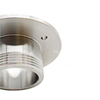 Titanium Alloys Titanium Alloys
|
High strength-to-weight ratio, superior corrosion resistance, and lightweight (high machining difficulty).
|
Ti-6Al-4V (Grade 5), Grade 2 (CP).
|
|
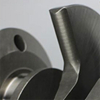 Inconel Inconel
|
High-temperature resistance, corrosion resistance, and fatigue resistance; engineered for high-strength parts in extreme environments.
|
Inconel 718
|
|
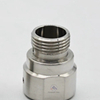 Invar36 Invar36
|
Extremely low coefficient of thermal expansion (CTE) at room temperature, excellent dimensional stability, and good ductility. It maintains nearly constant dimensions even during temperature fluctuations.
|
Invar36
|
When to Choose 5 Axis CNC Machining Services
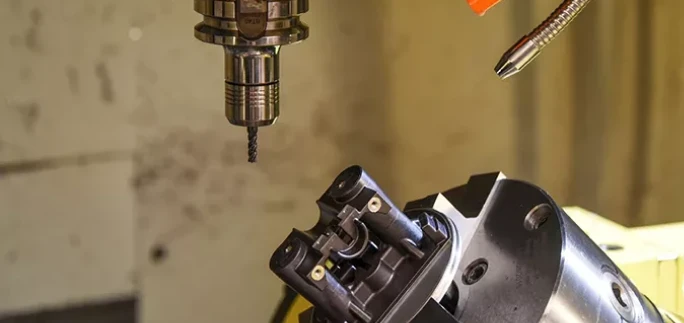
5 axis CNC machining services are ideal for parts that contain complex surfaces, multiple machining angles or features located on several sides. By allowing the cutting tool to approach the workpiece from different directions, more features can be completed in a single setup.
Consider 5-Axis CNC Machining Services when your parts require:
- Compound angles and angled holes
- Undercuts and hard-to-reach features
- Deep pockets or complex internal contours
- Curved and freeform surfaces
- Tight positional tolerances between multiple faces
- Fewer setups and reduced fixture-related errors
- Improved surface consistency on complex profiles
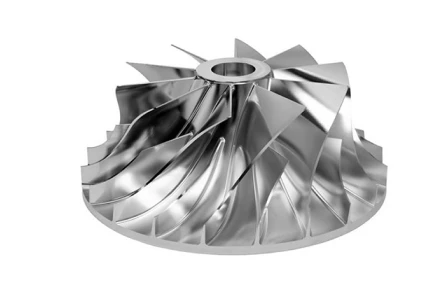
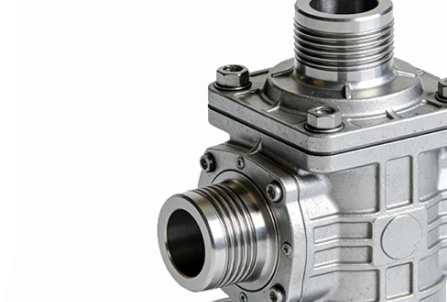
Typical components include impellers, turbine blades, aerospace brackets, medical instrument parts, robotic joints, mold inserts and complex valve bodies.
3 Axis vs. 5 Axis CNC Machining
Choosing the right machining method helps balance part complexity, precision, production time and cost.
| Comparison |
3 Axis CNC Machining |
5 Axis CNC Machining |
| Axis movement |
X, Y and Z |
X, Y and Z plus two rotational axes |
| Suitable geometry |
Simple and flat-sided parts |
Complex, curved and multi-angle parts |
| Number of setups |
Often requires multiple setups |
More features completed in one setup |
| Undercut capability |
Limited |
Suitable for many undercuts and angled features |
| Surface finish |
Suitable for standard surfaces |
Better tool orientation for curved surfaces |
| Typical applications |
Plates, brackets and simple housings |
Impellers, blades, molds and complex structural parts |
For simple components with easily accessible features, 3-axis machining may provide a more economical solution. For complex parts requiring close relationships between surfaces, holes and profiles, 5-axis machining can improve accuracy and reduce repeated positioning.
Industries Using 5-Axis CNC Machining Services
5-axis machining is suitable for industries that require complex geometry, tight tolerances and reliable dimensional consistency.
Aerospace
Used for structural brackets, turbine components, engine parts, fuel system components and lightweight aluminum or titanium parts.
Automotive
Suitable for prototype engine components, suspension parts, performance components, transmission housings and complex tooling.
Robotics and Automation
Used to manufacture robotic joints, actuator housings, end-effector components, mounting brackets and precision motion-system parts.
Medical Equipment
Suitable for surgical instrument components, equipment housings, implant prototypes and precision fixtures requiring smooth surfaces and accurate dimensions.
Marine and Energy
Used for impellers, propellers, hydraulic components, valve bodies and corrosion-resistant components with complex profiles.