

Process Principle + Advantages
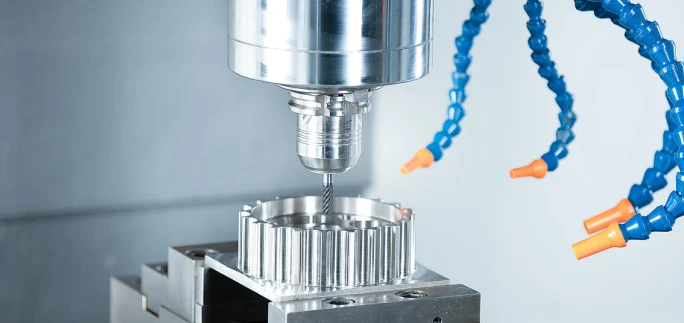
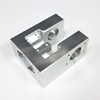
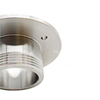
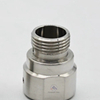
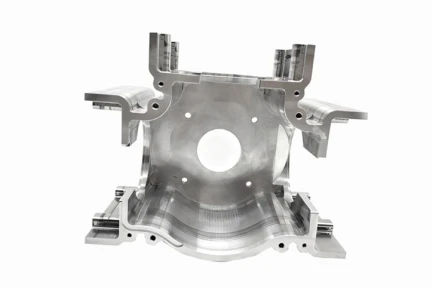
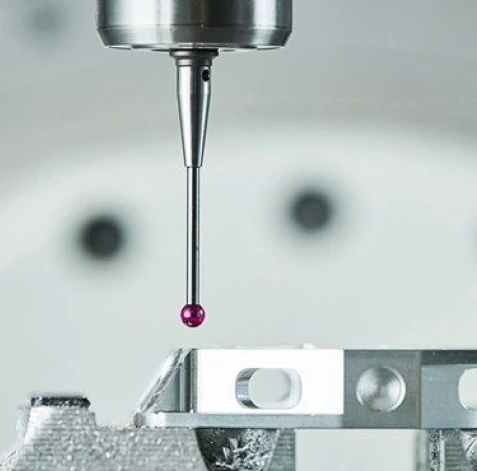
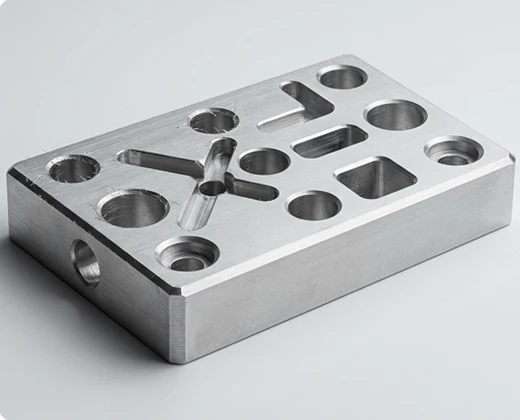
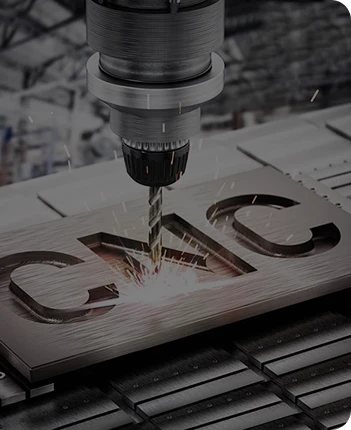
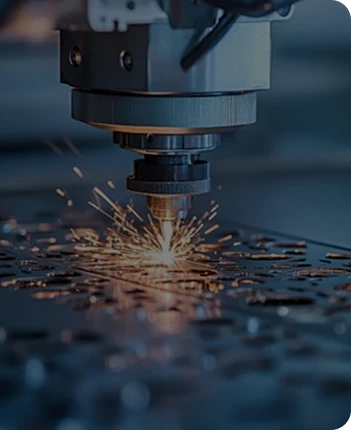
Milling is a CNC machining method that uses rotating tools to remove material layer by layer. Tools can move flexibly under multi-axis coordination to achieve high-precision forming of complex structures and intricate contours. Depending on processing requirements, three-axis, four-axis, or five-axis milling can be employed to efficiently complete tasks ranging from flat surfaces to complex curved surfaces, offering high precision, stability, and excellent repeatability. We support 3-axis, 4-axis, and 5-axis machining to meet the manufacturing demands of complex parts and high-precision structural components.
Compared with manual milling, CNC milling provides greater dimensional consistency, repeatability and production efficiency. It is suitable for both simple mechanical parts and complex components requiring accurate relationships between multiple surfaces.
The main advantages of CNC milling include:
Accurate production of complex geometries
Consistent dimensions across repeat orders
Compatibility with metals and engineering plastics
No dedicated production mold required
Suitable for prototypes and volume production
Flexible integration with drilling, tapping, boring and surface finishing
Efficient production of parts with multiple holes, pockets and machined faces
-

3-Axis Milling
The tool moves along the X, Y, and Z axes for cutting, representing the most fundamental structure.
Suitable for flat surfaces, grooves, holes, and simple curved parts.
Achieves accuracy up to ±0.01 mm at low cost
-

5-Axis Milling
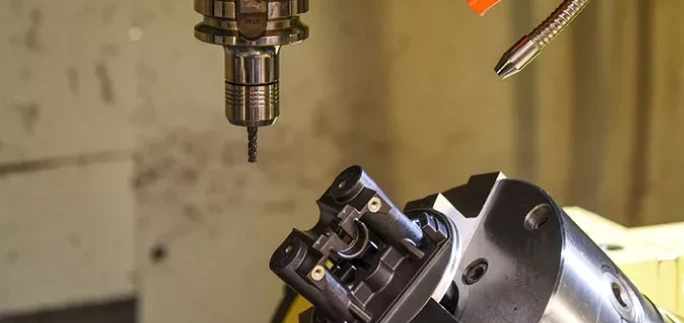
In addition to X, Y, and Z axes, the tool incorporates two rotational axes for cutting at any angle.
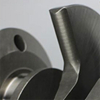
Suitable for complex surfaces, deep cavities, and irregular structures.
Achieves accuracy up to ±0.005 mm in a single setup.